
Emergency Garage Door Repair in San Jose: What to Expect When You Call at 2 AM
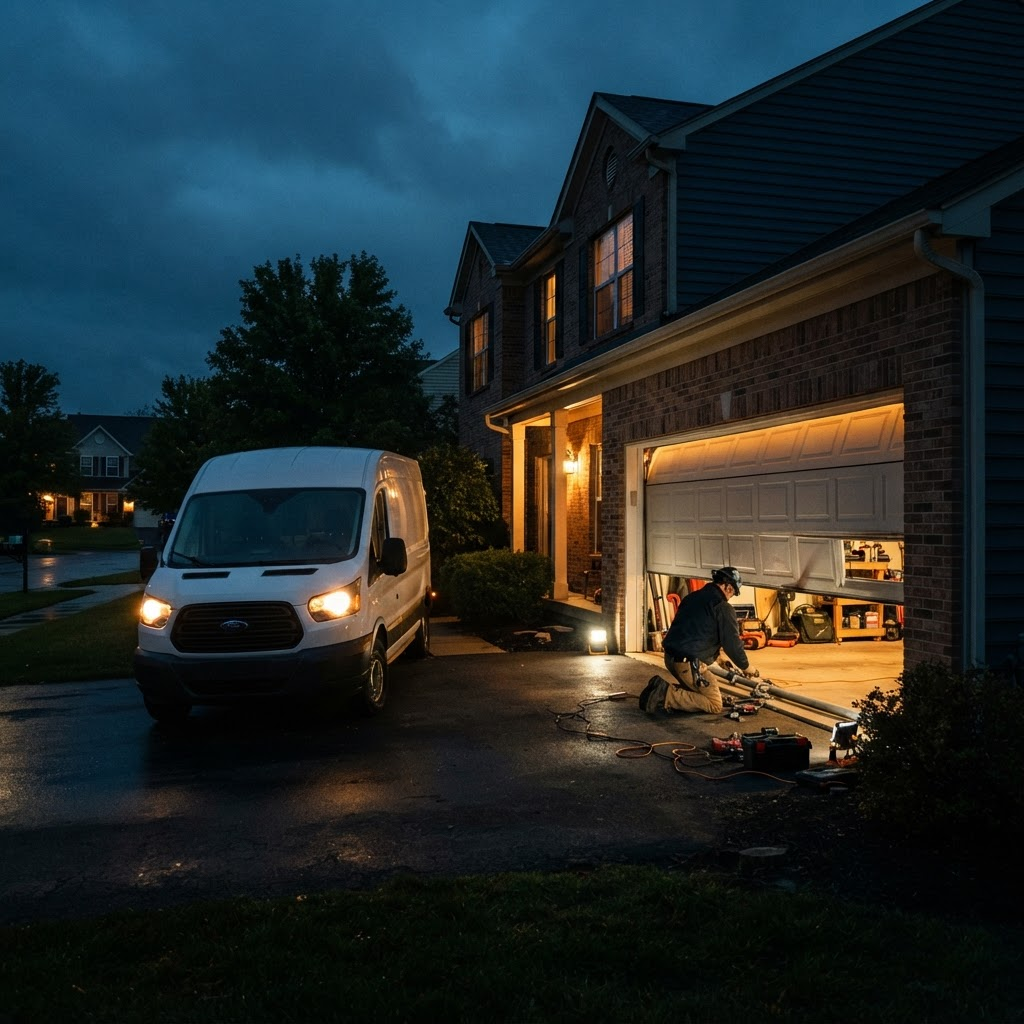
It's 11 PM on a Wednesday. You just pulled into the driveway after a long day, pressed the remote, and nothing happened. The garage door didn't move. Or maybe it's worse — you heard a bang like a firecracker from inside the garage an hour ago, and now the door is stuck halfway open, your car is inside, your tools are exposed, and you're standing in the driveway looking at a 200-pound door that's hanging crooked in the opening and clearly not going anywhere on its own.
You need help, and you need it now — not at 8 AM tomorrow, not “sometime this week.” Right now. The problem is, you've never needed emergency garage door service before, you don't have a company on speed dial, and you're about to do a panicked Google search that will return a list of phone numbers you know nothing about.
That search is where homeowners across San Jose, Milpitas, Fremont, and Silicon Valley are most vulnerable — because the urgency of the situation can cloud the judgment you'd normally apply when hiring any contractor. This guide tells you exactly what legitimate emergency service looks like, exactly what it should cost, and exactly what scam tactics to watch for.
First — Is This Actually an Emergency?
Before you call anyone, take 60 seconds to assess whether you truly need after-hours emergency service or whether the situation can safely wait until morning. This assessment can save you $100 to $200 in after-hours premiums.
True emergencies — situations that warrant an immediate call regardless of the hour — include a door stuck fully open that you cannot close manually or secure in any way (this is a security emergency), a door that has partially collapsed or fallen off its tracks in a dangerous position, a broken spring that occurred while the door was partially open leaving the door hanging unsafely, or a situation where someone or something is trapped by a malfunctioning door.
Situations that feel urgent but are safely waitable until morning include a door stuck in the closed position — your home is secure and your car is safely inside (or you can park in the driveway), an opener that has stopped working but the door can be operated manually using the emergency release, a noisy door that's still functional, or a remote that isn't working but the wall button still operates the door.
We're honest about this distinction with every caller. If someone calls at midnight describing a situation that can safely wait, we tell them so — and schedule a next-day appointment at standard daytime rates. We'd rather earn your trust by saving you money than earn an after-hours premium you didn't need to pay.
What Emergency Service Actually Costs
Emergency and after-hours garage door repair in the San Jose market typically adds $75 to $200 on top of the standard repair cost. This after-hours premium covers the technician's availability during off-hours, immediate dispatch, and the operational costs of maintaining a 24/7 response capability.
The repair itself costs the same as during business hours. The parts are the same price. The labor rate for the actual work is identical. The only addition is the after-hours dispatch fee — and a reputable company states this fee clearly before dispatching, so you know the total before anyone shows up at your door.
Here's what the math looks like in practice. A torsion spring replacement during regular business hours typically costs $300 to $500 in San Jose and Silicon Valley. The same spring replacement at 2 AM costs $375 to $700 — the standard repair cost plus the $75 to $200 after-hours premium. Our 2026 repair cost guide provides detailed daytime pricing for every common repair, which gives you a baseline to evaluate any after-hours quote.
Knowing these numbers protects you. If someone quotes you $1,000 for a single spring replacement at any hour — day or night — that's significantly above market rate and should prompt you to get a second opinion.
The Red Flags That Signal a Scam
The garage door repair industry has a well-documented problem with predatory emergency service operators, and the Federal Trade Commission has issued guidance on protecting yourself when hiring contractors for urgent home repairs. Here's what to watch for.
Extremely low advertised service call fees are the most common bait-and-switch entry point. A company advertising a $19 or $29 service call that later quotes $800 for a standard spring replacement has used the low fee to get in the door — sometimes literally — and then relies on your urgency and exhaustion to pressure you into accepting an inflated price. Legitimate service call fees for after-hours dispatch in Silicon Valley range from $75 to $200, and they're disclosed upfront.
Refusal to provide any price range before dispatching is a concern. Any experienced garage door company can tell you that a spring replacement typically costs $300 to $500 during the day or $375 to $700 at night. They don't need to see the door to give you a ballpark. A company that refuses to discuss pricing at all before sending someone out is planning to set the price based on how desperate you look when they arrive.
Pressure to approve work immediately, without a written estimate, without time to consider, and without the ability to decline without paying a steep “trip charge,” is a pressure tactic designed to prevent you from making a rational decision.
Lack of a California Contractors State License Board (CSLB) number is a legal and practical red flag. California law requires contractors performing work valued at $500 or more to hold a valid license. Ask for the license number, and verify it on the CSLB website before approving work.
What Legitimate Emergency Service Looks Like
When you call a reputable company for after-hours garage door repair, here's what the experience should look like.
Your call is answered by a real person — not a voicemail, not a callback form, not an automated menu. The person who answers asks you to describe the situation: what happened, what the door is doing (or not doing), whether anyone is trapped, and what you've tried so far. Based on your description, they confirm whether emergency dispatch is needed or whether the situation can wait until morning.
If dispatch is needed, they tell you the after-hours fee before sending anyone — no surprises. They give you an estimated arrival window — typically one to two hours in San Jose, Santa Clara, Sunnyvale, and surrounding areas, depending on time of night and technician availability.
The technician arrives in a fully stocked truck — carrying springs of various sizes, cables, rollers, opener components, remotes, and hardware — so the repair can almost always be completed in a single visit. They diagnose the issue, explain what they find, present a written estimate with the total cost (parts + labor + after-hours fee), and ask for your approval before beginning any work. You have the right to decline, and the only cost is the dispatch fee that was disclosed before they were sent.
After the repair, they test the door through multiple cycles, verify the safety sensors are working, and clean up any debris from the repair. You get a receipt detailing the work performed, the parts used, and the warranty coverage.
What to Do While Waiting for the Technician
If your door is stuck open and you're waiting for emergency service, there are things you can do to secure the situation.
If the door is partially open and you can safely reach the emergency release cord without standing under the door, pull it to disengage the opener. This prevents anyone from accidentally running the opener while the door is in a compromised position. Our guide on what to do when your garage door won't open covers the emergency release procedure in detail along with other immediate steps.
If the door is open and can't be closed, remove high-value items from the garage if practical — tools, bicycles, electronics, anything that could be taken. If the garage connects to the home's interior through an entry door, make sure that door is locked.
If you heard a loud bang and the door is now stuck, do not attempt to operate the door manually or with the opener. The bang almost certainly indicates a broken spring, which means the door's full weight is unsupported — trying to move it risks injury and further damage.
Choosing the Right Company Before the Emergency
The best time to research emergency garage door repair is before you need it — when you're not panicked, not standing in the dark, and not in a rush. Take five minutes now to identify a reputable local company, save their number in your phone, and know what to expect if you ever need to make that call.
Look for a company that's locally based in Silicon Valley — not a national dispatch service that routes calls to contract technicians who may not be familiar with your area. Verify their CSLB license. Read their Google and Yelp reviews, paying specific attention to reviews that mention after-hours service, pricing transparency, and the emergency experience.
Whether you're in Cambrian Park, Berryessa, Saratoga, Palo Alto, or any community in Silicon Valley, our commitment is the same: fast response, transparent pricing, honest assessment, and quality work — whether you call at 2 PM or 2 AM. Save our number now, and you'll have a trustworthy option ready when you need it most.
24/7 emergency garage door repair — no hidden after-hours fees
Stuck door in the middle of the night? Call now and talk to a real person. We'll tell you honestly whether it's a true emergency, quote the total upfront, and get a fully stocked truck to you fast across San Jose and Silicon Valley.
Call (408) 850-0805 now