
Garage Door Off Track? Why It Happens and What NOT to Do
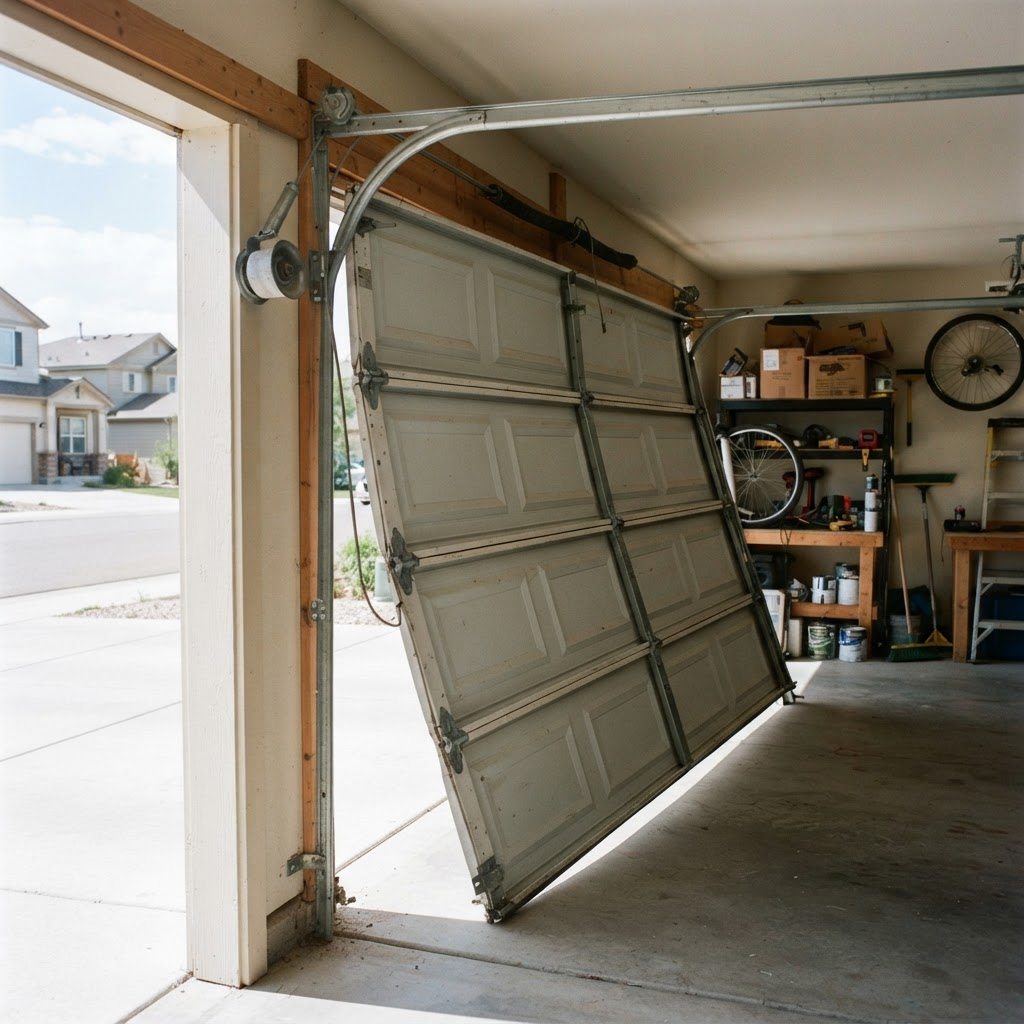
Something doesn't look right. Your garage door started going up, but it's crooked - one side is higher than the other, or the whole thing has jammed partway and won't move in either direction. Maybe you can see a roller sitting outside the track channel instead of inside it, or the door panels are bowing in a way they never have before. Maybe you heard a grinding, scraping, metallic sound and the door simply stopped.
Your garage door has come off its track, and what you do in the next five minutes will determine whether this is a straightforward repair or an expensive replacement.
If you're dealing with this right now in San Jose, Sunnyvale, Campbell, or anywhere across Silicon Valley, the single most important piece of advice in this entire article is this: stop operating the door. Don't press the remote again. Don't try the wall button. Don't try to push or pull the door manually. Every additional inch of forced movement on an off-track door causes compounding damage that escalates the repair cost and increases the danger.
Let's walk through what's actually happening, why it happened, and what the right course of action is.
What "Off Track" Actually Means
Your garage door travels on a system of tracks - two vertical tracks on either side of the door opening and two horizontal tracks that run along the ceiling of the garage, connected by a curved section. Rollers attached to each side of each door panel ride inside these tracks, and the track system is what keeps the door aligned, balanced, and moving in a straight path.
When a door goes "off track," one or more rollers have come out of the track channel. This means the door is no longer guided by the track system and is instead hanging, tilting, or binding at the point of derailment. The weight of the door - which can be 150 to 300 pounds on a standard residential door - is now being supported unevenly, putting extreme stress on the remaining rollers, the hinges, the panels, and the cables.
A door that's come off track on one side will visibly tilt, with one side sitting higher or lower than the other. A door where multiple rollers have derailed may jam completely, wedged in the opening at an angle. In severe cases, the door can partially collapse inward or outward, especially if the hinges at the point of derailment have also failed.
Understanding the mechanics of how roller bearings work helps illustrate why proper alignment is so critical - even small deviations from the intended path create exponentially increasing friction and stress on the system. The National Institute of Standards and Technology has published extensive research on rolling element bearings that underscores just how much load these small components carry.
Why Garage Doors Come Off Their Tracks
Doors don't jump off tracks randomly. There's always a cause, and identifying it is essential for preventing it from happening again after the repair.
The most frequent cause is an impact - someone backing a vehicle into the door while it's closed, or hitting the bottom panel while pulling into the garage with the door not fully open. Even a low-speed bump from a car can bend the bottom panel, distort the track at the impact point, or pop rollers out of the channel. In Silicon Valley households where tight two-car garages are common and multiple drivers share the space, vehicle impacts account for a significant percentage of off-track calls we receive from homeowners in Cupertino, Mountain View, and surrounding cities.
Worn or broken rollers are the second most common cause. Rollers have a finite lifespan - standard steel rollers last approximately 10,000 to 15,000 cycles, and nylon rollers last 20,000 to 25,000 cycles. As rollers wear, the wheel diameter decreases, the stem develops play, and the bearing loosens. A worn roller can wobble inside the track channel, and a severely worn roller can tilt enough to pop out of the channel entirely, especially in the curved section of the track where the directional change puts the most lateral force on the rollers.
A bent or misaligned track will cause the rollers to bind rather than glide. Tracks can bend from impact, from the vibration of daily operation loosening the mounting brackets, or from settling of the garage structure itself. A track that has shifted even a quarter inch out of its proper alignment creates a pinch point where rollers have to force their way through - and over time, that repeated forcing can pop a roller out.
Broken cables or a broken spring can also cause a door to come off track. When a cable snaps on one side, the door loses its lifting support on that side and drops suddenly, which can jolt rollers out of the track. Similarly, a spring failure causes the full weight of the door to slam onto the opener and remaining hardware, and the shock can derail rollers on one or both sides. Our guide on what happens when garage door cables snap or come loose explains this relationship in detail.
Obstruction in the track is a less common but still relevant cause. Small objects - a stone, a bolt, a piece of debris - lodged in the track channel can block a roller's path and force it out of the channel as the door tries to travel past the obstruction.
What NOT to Do - The Mistakes That Make Everything Worse
This section matters more than any other in this article. The natural instinct when a door goes off track is to try to fix it - to push the door back into position, to run the opener to see if it will straighten out, or to grab the bottom of the door and try to lift it manually. All of these instincts are wrong, and each one can turn a moderate repair into a major one.
Do not run the opener. When you press the remote or wall button with a door that's off track, the opener applies force to a door that can't travel in its intended path. The result is that the opener tries to drag the door along the rail while rollers grind against or outside the track. This bends the track further, damages additional rollers, can crack or bow door panels, strip the opener's gears, and snap cables. A single press of the button can cause hundreds of dollars in additional damage within seconds.
Do not try to push or pull the door manually. A door that's off track is under uneven stress. Panels are flexed in ways they weren't designed to flex. Hinges may be bent or partially detached. Cables may be slack or tangled. Pushing on a door in this state can cause a panel to buckle, a hinge to snap - sending a heavy steel or aluminum section swinging - or the door to drop suddenly if the remaining support fails.
Do not try to hammer or pry the track back into position with the door still in the track. The door's weight is pressing against the bent section, and trying to straighten the track under load is both ineffective and dangerous. Track straightening must be done with the door secured and the weight removed from the damaged section.
Do not try to pop the rollers back into the track yourself. This is the most tempting DIY fix, and it's the most dangerous. Rollers that have come out of the track are still connected to a door that weighs hundreds of pounds. Manipulating a roller near a stressed cable, a bent hinge, or a loaded spring puts your hands directly in the path of forces that can cause severe injury.
What You SHOULD Do
The correct response to an off-track garage door is straightforward, and it prioritizes safety above everything else.
- Stop all operation immediately. Do not press the remote, the wall button, or attempt to move the door in any way.
- Disengage the opener - carefully. If the door is partially open and you can safely reach the emergency release cord without standing under the door, pull it to disengage the opener trolley. This prevents anyone from accidentally running the opener and causing further damage. If you cannot safely reach the cord - if it would require standing under a partially derailed door - leave it alone.
- Get people and vehicles clear. If people or vehicles are trapped in the garage, exit through a side door, a back door, or an interior door to the house. Do not try to force the garage door open to get a car out. The car can wait - getting the door properly repaired and back on track takes priority over the inconvenience of leaving the vehicle inside for a few hours.
- Call a professional garage door repair company. Describe what you're seeing - which side is off track, whether the door is partially open or closed, whether you heard any unusual sounds before or during the derailment, and whether you know of an impact that caused it. This information helps the technician arrive prepared with the right parts and tools.
How Professionals Fix an Off-Track Door
When a technician arrives to repair an off-track door, the process is methodical and safety-focused.
The first step is securing the door. The technician clamps the door to the track at a stable point to prevent any further movement. If the door is partially open, they may use locking pliers or C-clamps on the track below the lowest secure roller to keep the door from sliding down.
Next, they assess the damage. This includes inspecting every roller on both sides, checking the tracks for bends and alignment, examining the hinges for cracks or bending, inspecting the cables for fraying or displacement from the drums, and checking the springs for integrity. A door that came off track due to a spring failure needs the spring replaced before the track repair can be completed - otherwise the door will be impossible to balance after realignment.
With the damage assessed, the technician releases the tension on the door by supporting its weight with the spring system or by carefully lowering it to the ground. The damaged rollers are replaced, the track is straightened or realigned using professional track tools, and any damaged hinges are swapped out.
The repaired door is then lifted back into the track, the rollers are seated in the channel, and the door is run through several test cycles to confirm smooth, even travel. The opener is reconnected and the travel limits and force settings are adjusted to match the realigned system.
The entire repair typically takes one to two hours depending on the severity of the derailment and the amount of secondary damage. Most track realignments with roller replacement fall between $150 and $400 in the San Jose and Silicon Valley area. If panels were damaged by the derailment or by forced operation after the derailment, panel replacement adds to the cost - which is why the "don't touch it" advice at the beginning of this article can literally save you hundreds of dollars.
Preventing Future Derailments
Once your door is back on track and running smoothly, there are practical steps you can take to prevent it from happening again.
- Install a vehicle stop or parking guide on the garage floor. These inexpensive rubber or plastic blocks give you a consistent visual and physical cue for where to stop your car, reducing the chance of bumping into the door. In tight Silicon Valley garages where every inch counts, a floor-mounted parking guide is one of the best investments you can make.
- Have your rollers inspected annually and replaced proactively when they show signs of wear. Waiting until a roller fails in service means it fails under load, which is when derailment happens. Replacing worn rollers during a scheduled maintenance visit means they're swapped out in a controlled environment with no risk.
- Check your track alignment periodically. Stand inside the garage with the door closed and sight down each vertical track. It should be plumb - perfectly vertical - with consistent spacing between the track and the door on both sides. If you see the track bowing outward, pulling away from the frame, or with loose mounting brackets, schedule a service call before a roller finds its way out.
- Keep the tracks clean. Wipe the inside of the track channels with a dry cloth a few times a year to remove dirt, cobwebs, and debris. A small obstruction that goes unnoticed can jam a roller at exactly the wrong moment.
If you heard a loud bang before the door came off track, the derailment was almost certainly caused by a spring or cable failure, and our guide to what to do when your garage door won't open walks through the diagnostic steps to confirm which component failed.
The Bottom Line
A garage door that's come off its track looks alarming, and the urge to fix it yourself or force it back into position is completely understandable. But an off-track door is a situation where patience and restraint save you money and keep you safe. The door is heavy, the forces are significant, and the damage from forced operation compounds quickly.
If your garage door has come off its track and you're in Willow Glen, Almaden Valley, Milpitas, or anywhere across Silicon Valley, step away from the door and call for professional help. A trained technician with the right tools will have your door back on track, running smoothly, and properly aligned - usually within a couple of hours and for less than you might expect.
Don't let a moderate repair become an expensive replacement. Leave it alone, call a pro, and let the door be fixed the right way.