
Should I Repair or Replace My Garage Door? A Decision Framework for San Jose Homeowners
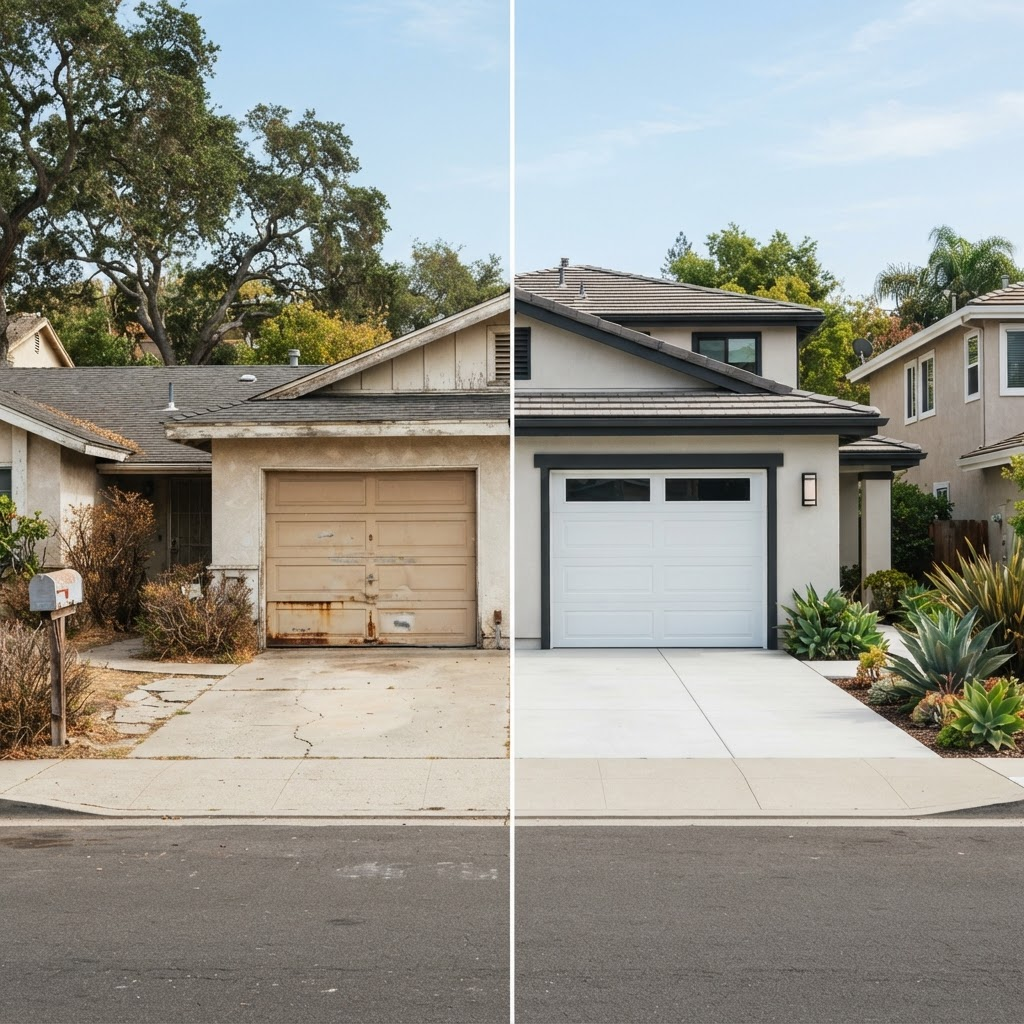
Your garage door is showing its age. Maybe the springs broke for the second time in three years. Maybe the panels are dented, faded, or starting to rust. Maybe the opener is getting sluggish and the whole system feels tired. Whatever brought you here, you're facing the question that every homeowner eventually confronts: is it worth repairing this door one more time, or is it time to replace the whole thing?
It's not always an obvious answer. A door that looks old and worn might have years of reliable service left with the right repairs. And a door that seems “mostly fine” might actually be costing you more in frequent repairs and energy loss than a new door would cost outright.
This guide gives you a structured way to think through the decision — not as a sales pitch for new doors, but as an honest framework that helps you spend your money where it makes the most sense.
The Age Factor — How Old Is Too Old?
The average residential garage door lasts 15 to 30 years depending on the material, the quality of installation, and how well it's been maintained. Steel doors tend to last 20 to 25 years. Wood doors can last 15 to 20 years with diligent maintenance, or as few as 10 years without it. Aluminum doors last 20 to 30 years but are prone to denting. Fiberglass doors last 15 to 20 years before the panels begin to yellow and become brittle.
Your door's age alone doesn't determine whether to repair or replace — but it heavily influences the math. A 5-year-old door with a broken spring is a straightforward repair. A 22-year-old door with a broken spring, worn rollers, fading panels, and a noisy opener is a different conversation entirely.
As a general framework: if your door is under 10 years old, repair almost always makes sense unless there's been catastrophic structural damage. If it's between 10 and 15 years old, compare the cost of the needed repairs against the cost of replacement — if repairs exceed 40 to 50 percent of a new door's price, replacement starts to make more financial sense. If the door is over 15 years old and needs significant work, replacement is often the better investment.
The National Association of Home Builders provides lifespan data for major home components, and garage doors consistently rank as one of the most cost-effective replacements in terms of longevity and return on investment.
The Cost Calculation — Repair vs. Replace Math
Let's put real numbers to this. A new garage door installed in San Jose typically costs between $1,200 and $4,500 for a standard residential door including installation, depending on material, insulation, style, and features. The average homeowner in Silicon Valley spends roughly $2,000 to $3,000 for a quality steel insulated door with professional installation.
Now compare that against the repair you're considering. A spring replacement runs $250 to $550. A full set of rollers costs $125 to $250. An opener replacement runs $450 to $950. Panel replacement ranges from $250 to $800 per section.
If you need one repair — say, a spring replacement — the math is obvious: $350 for a repair versus $2,500 for a new door. Repair wins by a mile.
But if you need multiple repairs — springs are broken, rollers are worn, the opener is dying, and two panels are dented — you might be looking at $1,200 to $1,800 in cumulative repairs on a door that's 18 years old and will need more work within a few years. At that point, spending $2,500 on a new door with a full warranty and modern features starts to look like the smarter investment.
For detailed pricing on individual repairs, our comprehensive San Jose garage door repair cost guide breaks down every component.
The Safety Factor
Garage door safety standards have evolved significantly over the past two decades. If your door or opener predates certain safety milestones, upgrading isn't just about convenience — it's about protecting your family.
Auto-reverse mechanisms, which cause the door to stop and reverse if it encounters an obstruction while closing, became federally mandated in 1993. If your opener is older than that and doesn't have this feature, replacement is strongly recommended regardless of the door's condition.
Modern openers also include rolling code technology that prevents code grabbing — a security vulnerability where someone could capture and replay your remote's signal. If your opener still uses fixed codes or DIP switches, any replacement remote you buy is inherently less secure than a modern system.
Battery backup is another modern feature that keeps your door operable during power outages — a consideration for homeowners in areas where winter storms occasionally affect the power grid. Timer-to-close features add security by automatically closing the door if it's been left open, and smart connectivity allows you to monitor and control the door remotely from your phone.
The Curb Appeal Factor
Your garage door occupies roughly 30 percent of your home's front facade, making it one of the most visually dominant elements of your home's exterior. A door that's faded, dented, mismatched with the home's style, or visibly worn drags down the overall appearance of the property — even if the rest of the home is beautifully maintained.
This matters financially. According to the annual Cost vs. Value Report, garage door replacement consistently ranks as one of the highest-ROI home improvement projects in the country — often returning 100 percent or more of the investment in increased home value. In a market like Silicon Valley where home values are among the highest in the nation, the curb appeal impact of a new garage door is amplified further.
If you're planning to sell your home within the next few years, a new garage door is one of the smartest upgrades you can make. If you're staying, you get to enjoy the improved appearance every day and benefit from the increased value when you eventually sell.
The Energy Factor
Insulated garage doors — particularly those with polyurethane foam insulation — provide meaningful energy benefits compared to uninsulated or poorly insulated doors. An insulated door reduces heat transfer between the garage and the outside environment, which matters if your garage shares a wall with conditioned living space, if you use the garage as a workshop or home gym, or if you have HVAC ducts running through the garage.
In Silicon Valley's climate, the energy savings from an insulated door are modest compared to extreme climates, but the secondary benefits are significant: insulated doors are quieter, stronger, and more resistant to denting than comparable uninsulated doors. If your current door is uninsulated and you're considering replacement, choosing an insulated model is a no-cost upgrade at the point of purchase that adds value for the life of the door.
The Warning Signs That Say “Replace”
Certain conditions point strongly toward replacement rather than continued repair.
Widespread rust or corrosion on steel panels that has progressed beyond surface oxidation into structural deterioration means the panels are compromised and will continue to weaken. Panel-by-panel replacement at $250 to $800 per section quickly exceeds the cost of a new door.
Significant structural damage — panels that are bowed, cracked, or separating at the joints — cannot be repaired to their original strength. A structurally compromised door is a safety hazard.
Discontinued panels are a practical issue rather than a safety one. If your door's manufacturer has stopped producing the panel style or color you need, a matching replacement is impossible, and a mismatched panel looks terrible. Full replacement is the only aesthetic solution.
Persistent operational problems despite repeated repairs suggest a fundamental issue with the door's fit, balance, or installation that individual repairs can't fully resolve. If you've had three or more service calls in the past year for different issues, the system as a whole may be nearing end of life.
For homeowners in Cupertino, Campbell, Sunnyvale, or anywhere in Silicon Valley, our guide on warning signs your garage door needs attention helps identify which issues are repair-worthy and which suggest deeper problems.
The Warning Signs That Say “Repair”
Just as clearly, certain situations strongly favor repair over replacement.
A single component failure — one broken spring, one frayed cable, one failed opener gear — on an otherwise healthy door is almost always a repair. These are consumable components designed to be replaced periodically throughout the door's life.
Cosmetic minor damage — a small dent in one panel, a scratch, or faded paint on a wood door — doesn't affect the door's structural integrity or performance. Cosmetic issues can be addressed individually without replacing the entire door.
A door that's fundamentally sound but noisy can typically be quieted dramatically with a roller upgrade, lubrication, and hardware tightening — all of which cost a fraction of a new door.
An opener that's failing on a door that's otherwise in excellent condition is a straightforward opener replacement, not a door replacement. The door and the opener are independent systems, and replacing one doesn't require replacing the other.
How to Get an Honest Assessment
The best way to make this decision is to get an on-site evaluation from a garage door repair company that's willing to give you an honest recommendation — even when that recommendation is “just repair it” rather than “buy a new door.”
A reputable technician will assess the door's overall condition, identify all current and impending issues, estimate the cost of repairing versus replacing, and present both options with their respective pros and cons. They won't pressure you toward the higher-ticket option if the repair genuinely makes more sense for your situation.
Whether you're in Almaden Valley, Mountain View, Milpitas, or anywhere across the valley, our commitment is the same: we'll tell you what your door needs honestly, present your options clearly, and support whatever decision you make. Sometimes that means a $300 spring replacement. Sometimes it means a $2,500 new door. The right answer depends on your specific door, your budget, and your plans for the home.
Get an honest assessment — we'll tell you which option saves more
Not sure whether to repair or replace? We'll evaluate your door on-site, lay out both options with clear pricing, and give you a straight recommendation — even when that's just a simple repair.
Request your free assessment