
Chain Drive vs. Belt Drive vs. Screw Drive Openers — Which Is Best for Your Garage?
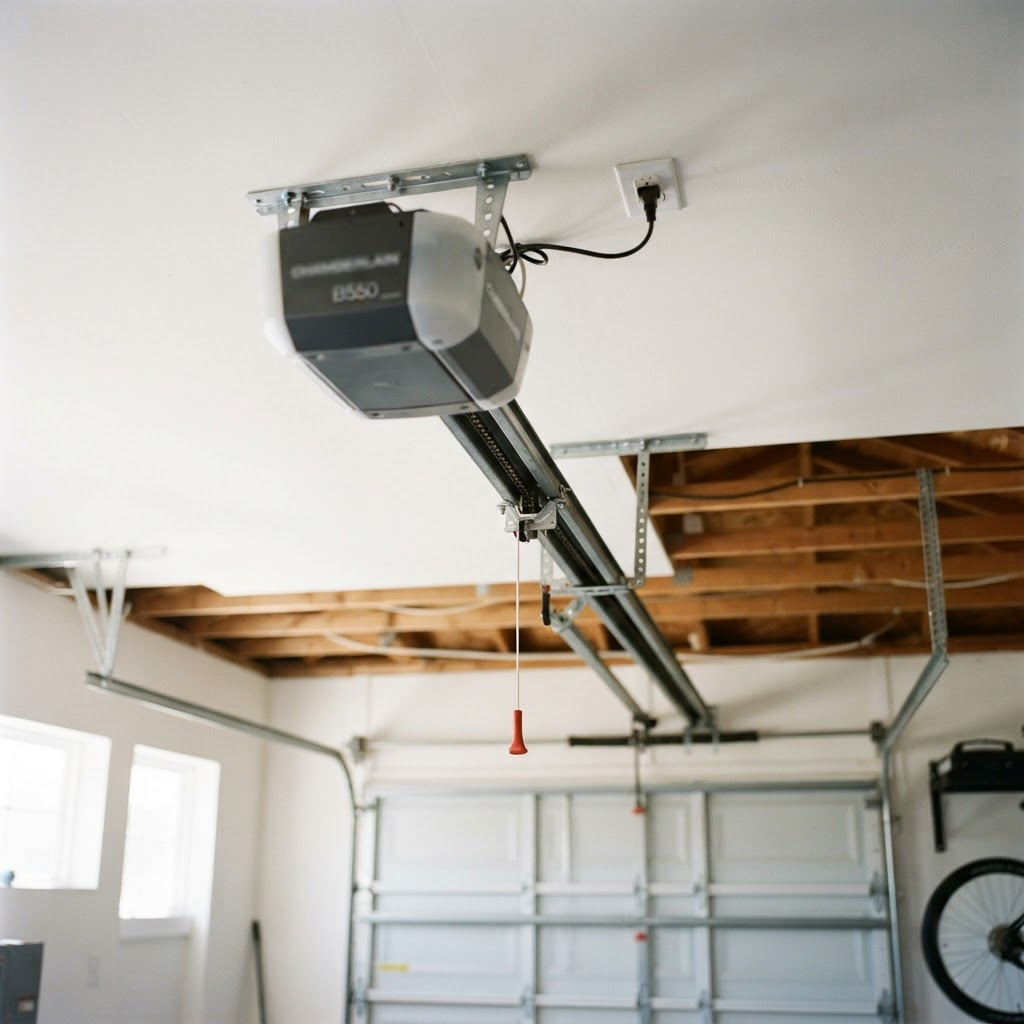
You've decided it's time for a new garage door opener. Maybe the old one finally gave out — the gears stripped, the motor burned up, or it's become so loud that everyone in the house knows when someone leaves at 6 AM. Maybe you're upgrading because you want smart features, quieter operation, or just the peace of mind that comes with knowing your opener isn't going to fail when you need it most.
Either way, you're about to face the first and most consequential decision in the buying process: which drive type do you want — chain, belt, or screw?
This isn't a minor detail. The drive mechanism is the heart of the opener's personality. It determines how the opener sounds, how much it costs, how long it lasts, how much maintenance it needs, and how it feels to use every single day. And the right answer isn't the same for every homeowner — it depends on how your home is laid out, what you value most, and what you're willing to trade off.
Here's a thorough, no-spin comparison based on what we see in the field, what we hear from homeowners after they've lived with each type for a few years, and what the engineering actually tells us about each mechanism.
How All Three Work — The Basics
Before comparing, it helps to understand the mechanical principle shared by all three. Every garage door opener has an electric motor, a rail that runs along the ceiling of your garage, and a trolley — a small carriage that rides on the rail and connects to the top of your garage door through a curved metal arm. When you press the button, the motor moves the trolley along the rail, and the trolley pulls or pushes the door open or closed.
The only difference between the three types is how the motor moves the trolley. In a chain drive, a metal chain wraps around a sprocket at each end of the rail and drags the trolley along. In a belt drive, a reinforced rubber or fiberglass belt replaces the metal chain. In a screw drive, a long threaded steel rod runs the length of the rail, and the motor rotates the rod — the trolley rides on the threads and moves as the rod turns, similar to how a lead screw converts rotational motion into linear motion.
Same job, three different ways of doing it. Each comes with its own strengths and compromises.
Chain Drive — The Proven Workhorse
Chain drive openers have been the default residential option for over half a century. If you grew up in a house with a garage, there's a good chance you grew up with a chain drive — and there's a good chance you remember the sound it made.
The mechanism is mechanically simple and extremely durable. A steel roller chain — similar in construction to a bicycle chain but heavier gauge — wraps around a drive sprocket powered by the motor and an idler sprocket at the far end of the rail. The chain engagement is positive, meaning there's no slippage, no stretching under load, and no gradual loss of grip. When the motor turns, the chain moves the trolley, period. This directness is why chain drives have earned their reputation as the most reliable drive type in residential use.
The chain itself is nearly indestructible under normal residential loads. It can rust if it's not lubricated — and it will get louder as it dries out — but a chain that receives basic annual lubrication will outlast the motor and the rest of the opener by years. Replacement chains are widely available and inexpensive, so even if a chain does eventually stretch or wear, the fix is straightforward and affordable.
Pricing is the chain drive's other major advantage. A quality chain drive opener — from brands like LiftMaster, Chamberlain, or Genie — costs significantly less than a comparable belt drive model. For homeowners in San Jose and Silicon Valley, a chain drive opener fully installed typically runs $450 to $650, depending on the brand, horsepower, and features.
The trade-off — and it's a meaningful one — is noise. A chain drive produces a distinctive metallic rattling during operation as the chain links engage and disengage from the sprocket and as the chain tension changes during travel. This noise isn't just airborne — it transfers through the rail into the mounting bracket, through the bracket into the ceiling framing, and from there into the structure of the house. In a detached garage, this is irrelevant. In an attached garage where bedrooms share a wall or sit directly above the garage — which describes a very large percentage of Silicon Valley homes in Cupertino, Campbell, Sunnyvale, and throughout the region — the noise travels through the structure and is audible in living spaces, especially during early morning or late night operation.
Chain drives also require regular lubrication — the chain needs a coating of garage-door-specific lubricant or white lithium grease applied at least once a year to prevent rust, reduce noise, and keep the sprocket engagement smooth. Without lubrication, a chain drive goes from moderately loud to uncomfortably loud within a few months.
The bottom line on chain drive: maximum durability and minimum cost, but you pay for it in noise and maintenance.
Belt Drive — The Quiet Performer
Belt drive openers replace the steel chain with a reinforced belt — typically made of steel-reinforced rubber, polyurethane, or fiberglass. The belt wraps around the same drive sprocket and idler arrangement as a chain drive, and the trolley attachment is identical. The only change is the material doing the pulling.
That single material change transforms the experience. Without metal-on-metal contact between the belt and the sprocket, the rattling vibration that defines chain drive operation is eliminated almost entirely. A belt drive opener in good condition produces roughly half the sound pressure level of a comparable chain drive during operation. In practical terms, you hear the motor running — a soft electric hum — and a quiet whir from the belt, but the jarring metallic noise is gone. For homeowners in Willow Glen, Mountain View, Almaden Valley, and any neighborhood where attached garages and bedrooms-over-garage layouts are the norm, this noise difference is the single most common reason homeowners choose belt drive.
The reduction isn't subtle, and it isn't temporary. A belt drive that's quiet on day one is still quiet on year ten. There's no gradual degradation into chain-like noise because the fundamental mechanism doesn't produce metallic resonance. What does change over time is the belt itself — rubber and polyurethane age, and after 15,000 to 20,000 cycles (roughly 10 to 15 years of average residential use), the belt may stretch, crack, or develop surface wear that requires replacement. Belt replacement is a standard repair, but the belt material is more expensive than a chain, and the total replacement cost is moderately higher.
Belt drives are also lower maintenance than chain drives in their daily operation. The belt doesn't require lubrication — no annual greasing, no rust prevention, no mess. You spray the bearing points and the rail, but the belt itself takes care of itself. This maintenance-free operation appeals to homeowners who want their garage door to open and close without ever thinking about it.
The cost premium for belt drive is real but reasonable. A quality belt drive opener installed in the Silicon Valley area typically runs $550 to $850 — roughly $100 to $200 more than a comparable chain drive model. Given that the opener will serve for 10 to 15 years, that premium works out to roughly $8 to $15 per year for dramatically quieter operation and reduced maintenance.
The bottom line on belt drive: the quietest residential drive type, minimal maintenance, and the smoothest operation — at a modest premium over chain drive.
Screw Drive — The Low-Maintenance Middle Ground
Screw drive openers take a fundamentally different mechanical approach. Instead of a flexible loop (chain or belt) driving the trolley, a screw drive uses a rigid threaded steel rod — essentially a large screw — that runs the length of the rail. The motor rotates the screw, and the trolley rides on the threads, translating the screw's rotation into the back-and-forth linear motion that opens and closes the door.
The mechanical simplicity of this arrangement is the screw drive's defining advantage. There's no chain to stretch, no belt to wear, no sprocket teeth to engage. Just one steel rod, one trolley, and one motor. Fewer moving parts means fewer things that can fail, and in practice, screw drive openers have a well-earned reputation for longevity and minimal maintenance requirements. The screw itself needs periodic lubrication — a spray of silicone or lithium grease along its length, typically once or twice a year — but that's the extent of the maintenance.
Screw drives also tend to be faster than chain or belt drives. The direct thread-to-trolley engagement translates motor rotation into trolley movement very efficiently, and most screw drive openers cycle the door noticeably faster than chain or belt models. For households that cycle the door frequently throughout the day — families with multiple drivers, home-based businesses, frequent deliveries — the faster cycle time is a practical daily benefit.
The noise level falls between chain and belt. There's no chain rattle, which makes screw drives meaningfully quieter than chain drives. But the steel-on-steel engagement between the screw threads and the trolley produces a whirring vibration that's more noticeable than a belt drive's near-silent operation. In the hierarchy, belt drive is quietest, screw drive is in the middle, and chain drive is loudest.
One technical consideration with screw drives: they're sensitive to temperature extremes. Steel expands when hot and contracts when cold, and the long threaded rod can change length enough to affect the trolley's travel precision. In regions with extreme temperature swings — freezing winters and blistering summers — this can cause operational issues that require seasonal limit-switch adjustment. In Silicon Valley's mild climate, this sensitivity is essentially a non-issue. Our temperature range is narrow enough that thermal expansion is negligible, making screw drive a more practical choice here than in many other parts of the country.
Screw drive pricing is comparable to belt drive — typically $500 to $800 installed in the San Jose area. They're less widely available than they once were, as belt drives have captured most of the "quiet operation" market, but they remain a solid and often overlooked option.
The bottom line on screw drive: fewest moving parts, lowest maintenance, fastest operation, moderate noise — a strong choice for homeowners who value simplicity and reliability.
The Decision Matrix — Side by Side
When you lay all three drive types next to each other across the factors that matter most to homeowners, the comparison becomes clear.
- Noise level: Belt drive wins decisively — the quietest by a meaningful margin, followed by screw drive, with chain drive being the loudest. This is the single most important factor for homes with attached garages and nearby bedrooms.
- Purchase cost: Chain drive is the most affordable, often by $100 to $200. Screw and belt drive are priced similarly to each other, both at a modest premium above chain.
- Durability and lifespan: All three are comparable when properly maintained. Chains last longest in raw mechanical endurance, belts require no maintenance but eventually need replacement, and screw drives fall in between with minimal maintenance and long service life.
- Maintenance: Screw drive requires the least ongoing attention — just an occasional spray of lubricant. Belt drive requires essentially none on the drive mechanism itself. Chain drive requires the most — regular lubrication to prevent rust, noise, and wear.
- Speed of operation: Screw drive is typically fastest, with chain and belt drives performing comparably.
- Availability and parts: Chain and belt drives dominate the market and have the widest parts availability. Screw drive models are less common, though still available from major manufacturers.
Features Beyond Drive Type That Matter
The drive mechanism is important, but modern openers offer additional features that can be equally significant to your daily experience.
Battery backup keeps the opener functional during power outages — no more being locked out or trapped inside during a storm that knocks out the power. Most premium belt and chain drive models from LiftMaster and Chamberlain now include battery backup as standard or optional.
WiFi connectivity and smartphone integration let you open, close, and monitor your garage door from anywhere through an app. You can check whether you left the door open, close it remotely, receive alerts when it opens or closes, and share access with family members or service providers. For the Silicon Valley audience, smart connectivity is often a deciding factor. If you're weighing a smart opener upgrade or repair, our team can walk you through the leading models and platforms.
Timer-to-close automatically closes the door after a set period if it's been left open — a feature that provides genuine peace of mind for forgetful households.
Soft-start and soft-stop technology gradually ramps the motor speed at the beginning and end of each cycle rather than starting and stopping abruptly. This reduces noise, reduces mechanical stress, and provides smoother operation.
Our Recommendation for Silicon Valley Homes
For most homeowners we serve across Santa Clara, Saratoga, Palo Alto, Milpitas, and throughout Silicon Valley, belt drive is the recommended starting point. The noise reduction alone justifies the modest premium over chain drive in homes with attached garages — and attached garages are the overwhelming majority in this region. Combine the quiet operation with low maintenance and the availability of smart-enabled models, and belt drive delivers the best overall daily experience for the investment.
Chain drive remains a perfectly valid choice for detached garages, workshops, or any garage that's well-separated from living spaces — and for homeowners on a tight budget who need a reliable opener at the lowest possible cost.
Screw drive is ideal for homeowners who value the lowest possible maintenance burden, want faster cycle times, and don't mind a noise level that falls between chain and belt. Silicon Valley's mild climate removes the temperature-sensitivity concern that limits screw drive's appeal in other regions.
Regardless of which drive type you choose, professional installation ensures that the unit is properly mounted, the rail is aligned, the travel limits and force settings are calibrated to your specific door's weight and dimensions, and the safety sensors are positioned and tested correctly. An improperly installed opener — regardless of how good the unit is — will underperform and wear out prematurely.
If your current opener is struggling and you're deciding between repair and replacement, our complete garage door opener troubleshooting guide helps determine whether the issue is fixable or whether it's time for a new unit — and if it's time for a new unit, this comparison will help you choose the right one.
Ready to upgrade? Call us for professional garage door repair and opener installation across Fremont, Los Gatos, Evergreen, and every community we serve. We'll help you choose the right drive type for your home and install it with the precision that makes it last.
Need help choosing? We'll recommend the right opener for your home
Tell us about your garage layout and what matters most — quiet operation, budget, or low maintenance — and we'll recommend and install the right drive type. Serving San Jose and all of Silicon Valley.
Get your free opener recommendation