
Smart Garage Door Openers: Are WiFi-Connected Openers Worth It in 2026?
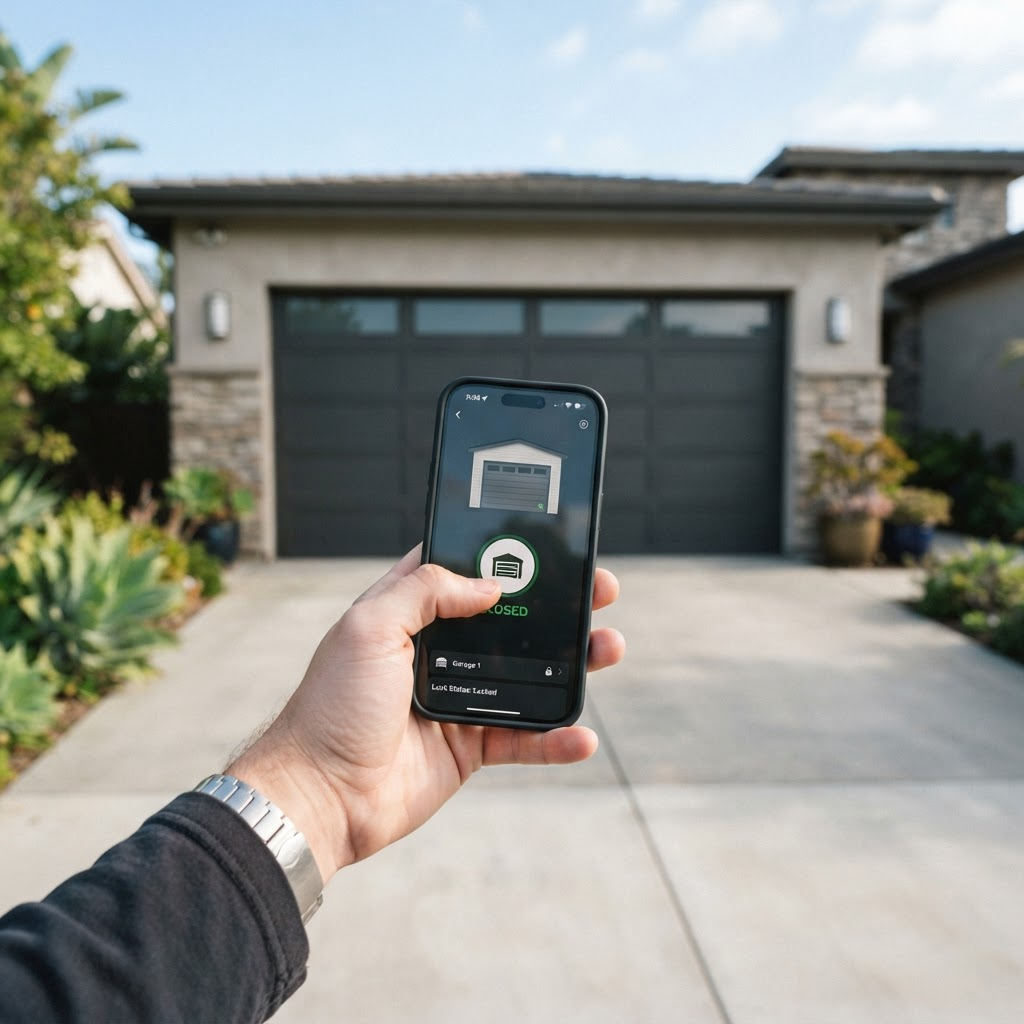
You can control your thermostat from your phone, lock your front door from the office, and watch your doorbell camera from a hotel room three states away. But your garage door — the largest opening in your home and the entry point your household uses more than any other — still operates on the same basic remote-and-wall-button system it has used for decades. Press a button, door goes up. Press it again, door goes down. No feedback, no monitoring, no alerts, no way to check whether you left it open after pulling out of the driveway on a Tuesday morning.
For many homeowners across San Jose and Silicon Valley — a region where smart home technology isn't a novelty but an expectation — the question isn't whether smart garage door openers exist, but whether they're actually worth the money. Does the technology deliver real daily value, or is it a solution looking for a problem?
The answer, after installing thousands of these systems across Silicon Valley, is that smart openers are genuinely worth it for most homeowners — but not for the reasons the marketing usually emphasizes. The flashy features look good in an ad. The features that actually matter are quieter and more practical.
What Makes an Opener "Smart"?
A smart garage door opener connects to your home's WiFi network and communicates with a smartphone app. At its core, this connection enables three things that a traditional opener can't do: remote monitoring (is the door open or closed right now?), remote control (open or close it from anywhere), and notification (get an alert when the door opens or closes).
Everything else — camera integration, guest access, scheduled operation, voice assistant compatibility, geofencing — is built on top of those three foundational capabilities. The technology itself relies on the same IEEE 802.11 wireless standards that power every WiFi device in your home. The opener connects to your router, the app communicates with the opener through a cloud server, and the data is encrypted in transit.
There are two ways to get a smart garage door: buy a new opener with built-in WiFi, or retrofit your existing opener with a smart controller that adds WiFi connectivity without replacing the entire unit. Both approaches work, and the right choice depends on the age and condition of your current opener.
The Major Smart Platforms — What Each Offers
The smart garage door market is dominated by a few key platforms, and understanding the differences helps you make a more informed choice.
myQ (LiftMaster / Chamberlain)
myQ is the most widely adopted smart garage door platform in the country. myQ is built into most new LiftMaster and Chamberlain openers manufactured since 2018, which means if you've purchased a new opener from either brand in the last several years, you may already have smart capability — you just need to download the app and connect it to your WiFi. For older openers, myQ offers the Smart Garage Hub, a standalone retrofit device that adds myQ connectivity to most major opener brands for roughly $30 to $80.
The myQ app provides real-time open/close status, remote control, activity logs, customizable alerts, and guest access. It integrates with Amazon Key for in-garage package delivery — a feature that lets delivery drivers place packages inside your closed garage rather than on the porch. The significant limitation of myQ is that native integration with Apple HomeKit and Google Home requires the myQ Community bridge, an additional $50 to $70 purchase. This has frustrated homeowners who want their garage door to work seamlessly within their existing smart home ecosystem without buying additional hardware.
Aladdin Connect (Genie)
Aladdin Connect is Genie's proprietary smart platform, offering similar core functionality — remote monitoring and control, alerts, and activity logs. Aladdin Connect is available built into newer Genie openers and as a retrofit kit for existing Genie units. The app is functional and reliable, though its ecosystem of third-party integrations is smaller than myQ's. For homeowners who already have Genie openers and want to add smart capability without replacing the unit, Aladdin Connect is the natural fit.
Third-Party Smart Controllers
Third-party smart controllers — including the Meross WiFi Garage Door Opener, the Chamberlain Universal Smart Garage Hub, and options from brands like Tailwind and Nexx — add WiFi connectivity to virtually any existing opener regardless of brand. These devices wire into your opener's wall button terminals and simulate a button press when activated through the app. They're typically the most affordable smart option — $40 to $100 for the controller — and many offer broader smart home integration than the brand-specific platforms. The Meross controller, for example, works natively with Apple HomeKit, Google Home, and Amazon Alexa without requiring additional bridges.
For homeowners who want maximum compatibility with their existing smart home setup — particularly those with Apple HomeKit environments — a third-party controller is often the most practical path.
The Features That Actually Matter Day to Day
Marketing materials emphasize the dramatic features — camera feeds, voice commands, geofencing that opens your door as you approach. Those features are real and they work, but the features that deliver the most consistent daily value are quieter and more mundane.
"Did I close the garage?" verification is, without exaggeration, the single most valuable feature a smart opener provides. Every homeowner has experienced the creeping anxiety, ten minutes into their commute, that the garage door might be open. With a traditional opener, the only option is to turn around and check. With a smart opener, you glance at the app — takes two seconds — and see a definitive answer. If it's open, you close it with a tap. This alone justifies the investment for many homeowners in Cupertino, Sunnyvale, and Mountain View who deal with commute routines where turning around isn't practical.
Timer-to-close and auto-close functionality ensures the door is never left open accidentally. You can configure the app to automatically close the door if it's been open for a specified period — typically configurable from 1 to 10 minutes — or to close it at a scheduled time each evening. For families with teenagers who forget to close the garage, for households where the garage is the primary entry point and the door gets left open during busy afternoons, and for anyone who has ever woken up at midnight wondering if the garage is open, auto-close provides genuine peace of mind.
Guest and service provider access solves a real logistics problem. You can send a time-limited access link to a housecleaner, dog walker, contractor, or package delivery service, allowing them to open the garage during a specific window without giving them a permanent remote, sharing your security code, or being home to let them in. In a region where dual-income households are the norm and service providers are frequently needed during work hours, this feature eliminates a meaningful daily friction point.
Activity logging shows every open and close event with timestamps and user identification. This sounds trivial until you need it — and then it's invaluable. Knowing exactly when the door opened and closed, and who triggered it, provides security awareness and accountability that a traditional opener simply can't offer.
The Honest Limitations
Smart openers aren't perfect, and pretending otherwise would be dishonest. There are real limitations that you should understand before investing.
WiFi reliability determines everything. The entire system depends on a stable WiFi signal reaching your garage. If your router is on the second floor at the far end of the house and the garage is on the opposite side, the signal in the garage may be too weak for reliable operation. Before installing a smart opener or controller, test your WiFi signal strength in the garage using your phone. If the signal is weak or intermittent, you'll need to address it — with a WiFi range extender, a mesh network node, or a dedicated access point — before the smart features will work reliably.
Cloud dependency means occasional outages. Smart opener apps communicate with the opener through a cloud server operated by the platform provider. If that server goes down — which happens occasionally with every cloud service — remote access is temporarily unavailable. The opener continues to work normally with the physical remote and wall button; only the smart features are affected. But for homeowners who rely heavily on app-based control, even brief outages can be frustrating.
Subscription fees have entered the market. Some platforms have introduced tiered service models where basic monitoring and control remain free, but advanced features — video storage, extended activity history, enhanced guest access — require a monthly subscription. Before purchasing, understand what's included free and what carries an ongoing cost. Subscription creep is a legitimate concern in the smart home space.
Privacy and security deserve consideration. A WiFi-connected opener is an internet-connected device attached to the largest physical opening in your home. Choose products from established manufacturers that use encrypted communication, issue regular firmware updates, and have transparent data handling policies. Avoid ultra-cheap smart controllers from unknown brands that may not maintain the same security standards.
Cost Breakdown — New vs. Retrofit
For a brand-new smart opener — a belt-drive unit with built-in WiFi and battery backup — expect to pay $550 to $950 installed in the Silicon Valley area. This includes the opener, rail, mounting hardware, safety sensors, remotes, and professional installation with calibration and WiFi setup. This is the right path if your current opener is older than 10 to 12 years, noisy, lacking modern safety features, or showing signs of wear. You're getting both a mechanical upgrade and smart capability in one investment.
For a smart retrofit on an existing opener — adding WiFi connectivity without replacing the unit — expect to pay $40 to $150 for the controller device itself, plus $75 to $150 for professional installation if you prefer not to DIY. This is the right path if your current opener is relatively new, runs well, and you simply want to add smart features. Most retrofit controllers are straightforward enough for a confident DIYer, but professional installation ensures the wiring is correct and the app is configured properly.
For homeowners who are weighing the mechanical aspects of a new opener alongside the smart features, our chain drive vs. belt drive vs. screw drive comparison guide covers the drive type decision in detail. And if your current opener is failing and you're unsure whether the remote issue is the opener or the remote itself, our guide on reprogramming garage door remotes for LiftMaster, Chamberlain, and Genie can help you troubleshoot before committing to a replacement.
Our Recommendation for Silicon Valley Homes
For most homeowners we serve across Almaden Valley, Evergreen, Campbell, Palo Alto, and the rest of Silicon Valley, a smart opener is worth the investment. The combination of remote monitoring, auto-close, guest access, and activity logging provides daily practical value that justifies the modest cost premium — particularly in a region where tech-forward homebuyers increasingly expect smart home integration as a baseline.
If your current opener is young and healthy, a smart retrofit controller is the most cost-effective path — $40 to $150 to add full smart capability without replacing what's already working.
If your opener is aging, noisy, or lacking modern safety features, a new belt-drive opener with built-in WiFi kills two birds with one stone — you get the mechanical upgrade you need and smart connectivity as part of the package.
Either way, professional installation and configuration ensures that the WiFi connection is reliable, the app is set up correctly, the safety features are tested, and you're not left troubleshooting connectivity issues on your own.
Call us for professional garage door repair and smart opener installation across Fremont, Santa Clara, Saratoga, Milpitas, and every community we serve. We install all major brands, configure the app on your phone, and make sure everything works before we leave.
Upgrade to a smart opener — we install and configure for you
Want the peace of mind of checking your garage from anywhere? We install and set up smart openers and retrofit controllers across San Jose and Silicon Valley — app configured, WiFi tested, and safety features verified before we leave.
Get your free smart opener quote