
Garage Door Cable Snapped or Loose? What's Happening Inside Your Door System
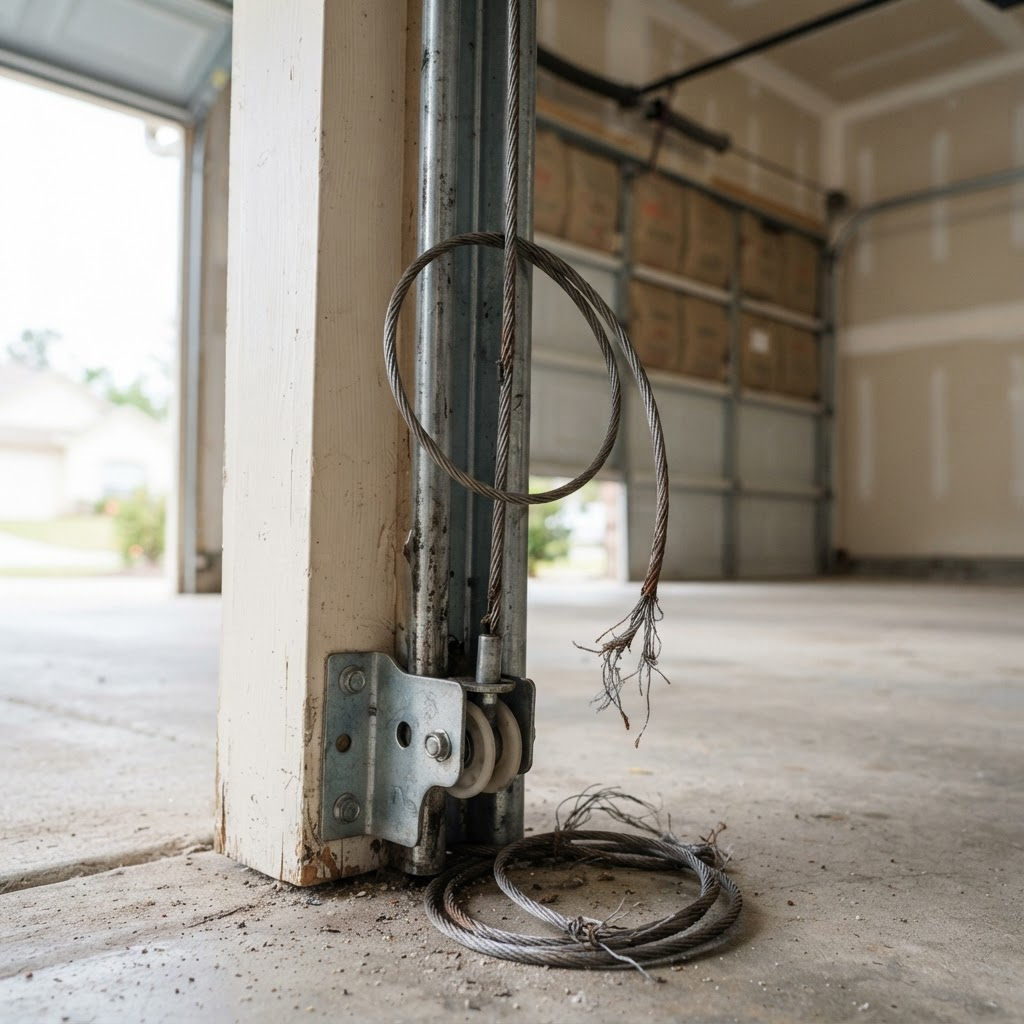
You walked into your garage and noticed something that wasn't there yesterday - a steel cable hanging slack along the side of your door, or coiled on the floor like a metal snake. Maybe the door is sitting crooked in the opening, one side lower than the other. Or maybe you tried to open the door and it lurched sideways, grinding and scraping before you hit the button again to stop it.
What you're looking at is a garage door cable that has either snapped, come off its drum, or lost tension - and it's one of the most urgent repairs in the garage door world. Not because the cable itself is expensive, but because a failed cable means the door is now operating without its safety net, and continued use in this condition can cause a cascade of secondary damage that turns a $200 repair into a $1,500 nightmare.
If this is happening right now at your home in San Jose, Santa Clara, or anywhere across Silicon Valley, stop using the door immediately and read on.
What Garage Door Cables Actually Do
To understand why a cable failure is serious, you need to understand the job cables perform every time your door opens and closes.
Your garage door's weight is counterbalanced by springs - either torsion springs mounted on a shaft above the door, or extension springs running along the horizontal tracks. But springs don't connect directly to the door. The connection between the spring system and the door is made through steel cables.
In a torsion spring system, cables attach to brackets at the bottom corners of the door. From there, they run upward along the inside of the vertical tracks, pass through the curved track section, and wrap around cable drums - metal spools mounted at each end of the torsion shaft above the door opening. When the door closes, the cables unwind from the drums as the door descends, and the torsion spring winds tighter to store energy. When the door opens, the spring unwinds, rotating the drums, which pull the cables and lift the door.
In an extension spring system, cables run through a pulley system that connects the springs to the door. The mechanical principle is the same - cables transfer the mechanical energy from the springs to the door - but the routing is different.
In both systems, the cables carry the full weight of the door during every cycle. A standard two-car garage door weighs 200 to 300 pounds, and the cables handle this load thousands of times over their lifespan. They are not decorative. They are structural, load-bearing components. This is fundamentally a problem of stored energy and mechanical force - the same classical mechanics principles that govern any tensioned pulley system.
Why Cables Fail
Garage door cables are made of galvanized aircraft-grade steel wire rope, typically 1/8 inch in diameter for residential doors. Despite their strength, they are subject to the same wear mechanisms as any component under repeated stress.
The most common cause of cable failure is wear at the point where the cable wraps around the drum or passes through a pulley. Each time the door cycles, the cable bends at these contact points, and over thousands of cycles, the individual wire strands that make up the cable begin to fray and break - one strand at a time. This is why fraying is such an important visual warning sign. A cable that shows visible fraying is a cable that's partway through its failure process.
Rust and corrosion accelerate cable deterioration, particularly in garages that experience moisture. Silicon Valley garages are generally dry, but homes in Fremont near the bay, or homes in areas with poor garage drainage, can see accelerated cable corrosion.
Cables can also come off their drums without actually breaking. This typically happens when a spring breaks - the sudden release of tension causes the shaft to spin and the cable to unwind and slip off the drum. It can also happen when the cable drum's set screws loosen, allowing the drum to spin independently of the shaft, which causes the cable to unwind and pile up.
A misaligned or damaged track can cause the door to travel unevenly, which puts asymmetric stress on the cables. Over time, the cable on the stressed side wears faster and fails sooner. Our guide on garage door off-track problems explains how track and cable issues are interconnected.
The Danger of Operating a Door With a Failed Cable
When one cable fails, the door loses its balanced support on that side. The spring system is still providing lifting force, but now all of that force is being transmitted through only one cable on the opposite side. This creates a dramatic imbalance.
The door will tilt visibly - one side hanging lower than the other. If you try to open or close the door with the opener, the motor will attempt to drive the door straight while the spring system pulls it crooked. The result is enormous lateral stress on the tracks, the rollers, the hinges, and the remaining cable. The tilting door can jam in the tracks, bend the tracks outward, crack door panels, and in many cases, cause the second cable to fail as well - because it's now carrying double its designed load.
If both cables fail simultaneously - which can happen if the door is operated after the first cable goes - the door becomes dead weight supported only by the opener trolley and the track rollers. This is an extremely dangerous condition. The door can drop suddenly, and a 250-pound door falling from a partially open position can cause serious injury or damage to anything beneath it.
What to Do When You Discover a Cable Problem
The protocol is the same as any structural garage door failure: stop using the door immediately.
If the door is closed, leave it closed. If it's partially open and sitting crooked, do not try to close it manually or with the opener. If you can safely reach the emergency release cord without standing under the tilted door, pull it to disengage the trolley. If you can't reach it safely, leave everything as it is.
Do not attempt to rewind a cable onto the drum yourself. The cable drum is connected to the torsion spring shaft, and manipulating the drum while the spring is under tension is extremely dangerous. Cable repair involves handling the spring system, and spring systems should only be serviced by trained technicians with proper tools.
Call for professional garage door repair and describe what you see: which side the cable has failed on, whether the door is open or closed, whether it's sitting level or tilted, and whether you heard a bang (which would suggest a spring broke first and caused the cable to come off).
How Cable Repair Is Performed
A technician repairing a garage door cable follows a careful sequence that accounts for the stored energy in the spring system.
First, the door is secured in the closed position. If it's stuck partially open, the technician safely lowers it using controlled methods. The torsion spring tension is then carefully released using winding bars - the spring must be fully deloaded before the cable can be safely handled.
The old cable is removed from the bottom bracket and from the cable drum. The new cable - which is cut to the exact length required for the specific door height - is threaded through the bottom bracket, routed along the track, and wrapped around the cable drum. The winding pattern on the drum matters: the cable must wrap in the correct direction and sit in the drum's grooves to feed smoothly during operation.
With the new cable in place, the spring is rewound to the correct number of turns. The technician then tests the door's balance, adjusts the opener's force and travel limits, and runs several complete cycles to confirm that the cables track properly on the drums throughout the full range of travel.
Most technicians recommend replacing both cables at the same time, even if only one has failed. The reasoning is simple: both cables are the same age and have experienced the same number of cycles. If one has failed, the other is likely close behind. Replacing both during a single visit costs marginally more than replacing one - the labor is almost identical - and it prevents a return visit for the second cable in a few weeks or months.
Recognizing Cable Problems Before They Fail
Cable failures are preventable when caught early. During your regular visual inspections - which we recommend at least quarterly - look for these warning signs.
Visible fraying is the most obvious. If you can see individual wire strands separating from the cable body, the cable is deteriorating and should be replaced before it snaps. Fraying typically starts at the point where the cable wraps around the drum or at the bottom bracket connection.
Rust or discoloration on the cable surface indicates corrosion that's weakening the steel. A healthy cable has a silvery metallic appearance. A cable that's turning brown, orange, or dark gray is corroding.
Slack in the cable when the door is closed means the cable has stretched, come partially off the drum, or the spring tension has been lost. A properly functioning cable should be taut at all times when the door is in the closed position.
Kinks or bends in the cable indicate that it has been stressed beyond its design limits at some point. A kinked cable has compromised strength at the kink point and should be replaced.
For homeowners across Evergreen, Cambrian Park, Berryessa, and every neighborhood in the valley, a few minutes of visual inspection every few months can save you from the inconvenience and cost of an emergency cable failure.
Cable Replacement Cost
Cable replacement is one of the more affordable garage door repairs. In the San Jose and Silicon Valley market, replacing both cables typically costs between $150 and $300, including parts and labor. The cables themselves are inexpensive - the cost is primarily labor, because the technician must work with the spring system to safely remove and install the cables.
If the cable failure was caused by a spring break, the spring replacement is an additional cost. If the door went off track or panels were damaged from operating the door after the cable failed, those repairs add to the total. This is why the "stop using the door" advice is so critical - the cable itself is cheap to replace, but the collateral damage from continued use is not.
How Cables and Springs Work Together
Understanding the relationship between cables and springs helps you maintain your entire door system more effectively. The cables are the physical link between the spring's stored energy and the door's weight. When the springs are healthy and properly tensioned, the cables experience smooth, consistent loading with each cycle. When a spring begins to lose tension - which happens gradually over its lifespan - the cables compensate by carrying a slightly different load pattern, which can accelerate their wear.
This is why a comprehensive broken garage door spring repair always includes a cable inspection. A spring failure subjects the cables to shock loading, and even if the cables survive the event, they may have been damaged in ways that aren't immediately visible.
Similarly, during cable replacement, a good technician will inspect the springs, the drums, the bottom brackets, and the entire lifting system. These components work as an integrated unit, and a weakness in any one of them affects all the others.
When to Call for Cable Service
Call immediately if you see a cable hanging loose or coiled on the floor, if the door is visibly tilted or crooked, if you can see fraying on either cable, or if the door made a loud noise and then started operating unevenly.
Schedule a proactive replacement if your cables show early signs of wear - minor fraying, surface rust, or slight slack - even if the door is still functioning normally. Proactive replacement during business hours at standard rates is always preferable to an emergency call after a cable snaps at an inconvenient time.
Whether you're in Los Gatos, Saratoga, Palo Alto, or any community across Silicon Valley, our technicians carry cables, drums, and the tools needed for safe cable work on every truck. Most cable replacements are completed within an hour, and your door will be back to smooth, balanced operation before you know it.
Cable issues are urgent - book same-day cable repair and get your door back to safe, balanced operation today.