
Garage Door Styles That Match Silicon Valley Home Architecture — From Craftsman to Contemporary
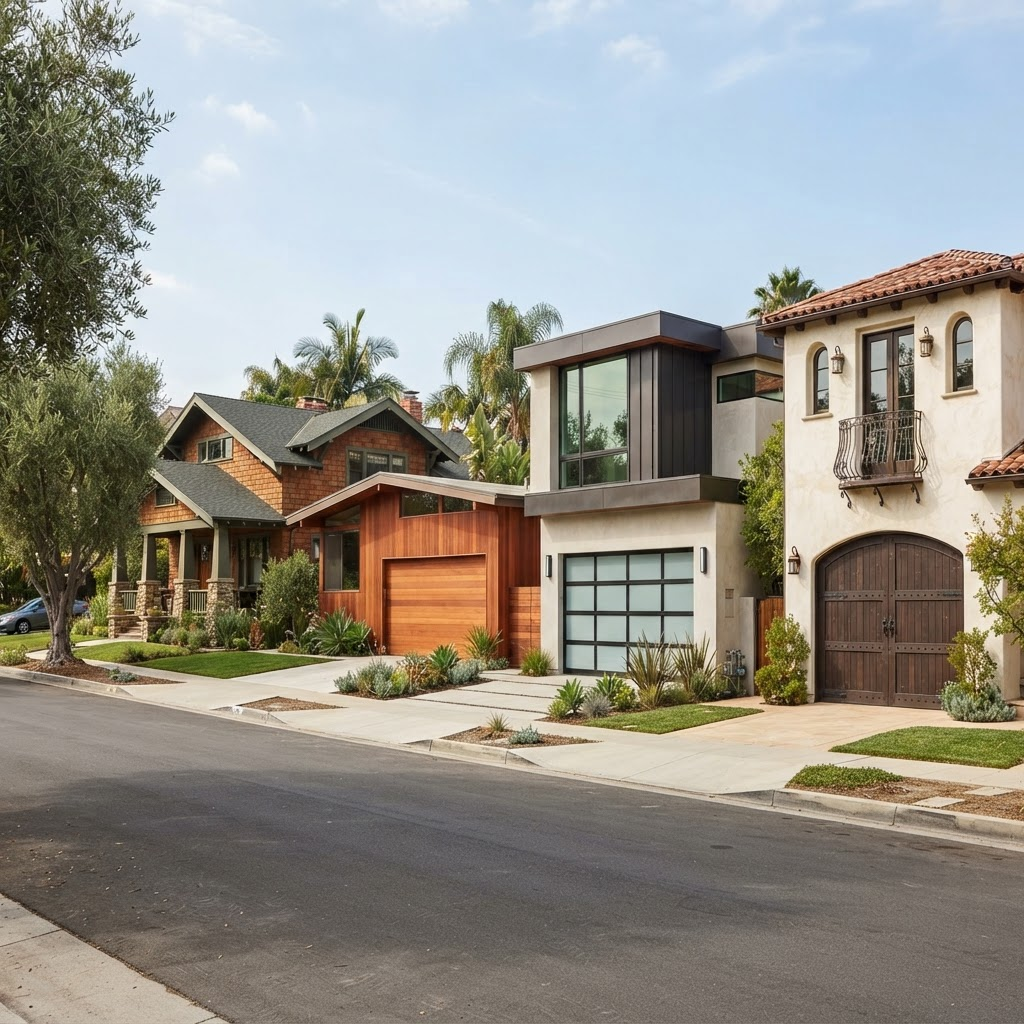
Drive through any city in Silicon Valley and you'll pass through a living museum of American residential architecture. Craftsman bungalows from the 1920s sit a few blocks from midcentury modern ranch homes built in the 1950s. Spanish Colonial revivals share neighborhoods with contemporary builds clad in glass and steel. Eichler homes — the iconic modernist tract houses unique to this region — stand alongside traditional colonial two-stories and Mediterranean-inspired estates.
Each of these architectural styles speaks its own visual language — a set of proportions, materials, textures, and details that give the home its character. And your garage door, occupying roughly 30 percent of your home's facade, either speaks that same language or contradicts it. There's no neutral ground. A garage door either reinforces your home's architectural intent and makes the whole composition more beautiful, or it clashes with the design vocabulary and makes the house look like it can't make up its mind.
Getting this match right is one of the highest-impact design decisions you'll make as a homeowner. Here's how to match door styles to the most common architecture types across Silicon Valley.
Craftsman & Bungalow Homes
Craftsman homes are found extensively in Willow Glen, Rose Garden, older neighborhoods in Mountain View, and select streets throughout Palo Alto. They're defined by exposed rafter tails, tapered columns resting on stone or brick piers, wide front porches, double-hung windows with divided lites, and an emphasis on natural materials and visible craftsmanship.
The ideal garage door for a Craftsman home is a carriage house style with vertical board detailing, decorative hardware (strap hinges, ring handles, or cross-buck accents), and a paint color that either matches the home's trim or complements its body color. The vertical board pattern echoes the board-and-batten siding found on many Craftsman garages, and the decorative hardware references the era when garage doors were actually swinging carriage doors — a historical connection that feels authentic on homes from this period.
Window configurations on Craftsman garage doors should use divided lites — small individual panes arranged in rows — that echo the multi-pane windows on the home itself. Arched or rectangular top sections both work, depending on the window shapes used on the rest of the home. Wood or steel doors with realistic wood-grain textures are both appropriate; modern steel carriage doors have achieved a level of grain realism that's nearly indistinguishable from actual wood at street-viewing distance, with dramatically less maintenance.
What to avoid on Craftsman homes: contemporary flush panels with no detailing, full-view glass-and-aluminum doors, minimalist horizontal grooves, or any style that prioritizes sleekness over texture and character. These modern elements conflict fundamentally with the Craftsman emphasis on handcraft, natural materials, and visible structural detail.
Midcentury Modern & Ranch Homes
The single-story ranch homes that blanket neighborhoods throughout Campbell, Cambrian Park, Sunnyvale, Berryessa, and Blossom Valley were built during the postwar suburban expansion of the 1950s and 1960s. Their architectural DNA emphasizes horizontal proportions — low-pitched rooflines, wide facades, picture windows, and an intimate connection between indoor and outdoor living spaces.
These homes look best with garage doors that reinforce horizontal geometry. Flush panels with long horizontal grooves, smooth raised horizontal panels, or clean contemporary designs with wide-plank orientation all harmonize with the ranch home's horizontal emphasis. Colors should be neutral and complementary — matching the body color creates a unified horizontal plane, while matching the trim creates subtle definition without disrupting the linear flow.
Eichler homes — Joseph Eichler's iconic modernist tract homes found in Palo Alto, Sunnyvale, and select San Jose neighborhoods — deserve special mention. Eichlers feature post-and-beam construction, floor-to-ceiling glass, flat or low-slope rooflines, and an intentionally minimal aesthetic. The ideal Eichler garage door is either a flush panel in a tone that matches the home's siding or a full-view aluminum door with frosted or obscured glass that echoes the home's extensive glazing. Ornate styles of any kind — carriage doors, raised panels, decorative hardware — look categorically wrong on an Eichler.
What to avoid on ranch and midcentury homes: ornate carriage house styles with heavy vertical detailing, decorative iron hardware, arched tops, or any style that introduces vertical emphasis to a fundamentally horizontal composition. The competing visual directions create tension that reads as architectural confusion.
Contemporary & Modern Homes
Newer contemporary homes are proliferating across Cupertino, new developments in Mountain View, premium areas of Los Altos, and custom builds throughout the valley. These homes are characterized by flat or very low-slope roofs, large expanses of glass, mixed materials (steel, concrete, wood, glass), and geometric compositions that emphasize clean lines, angular forms, and visual contrast.
Full-view aluminum doors with frosted, tinted, clear, or obscured glass panels are the signature choice for contemporary architecture. They flood the garage with natural light, create visual transparency, and complement the glass-and-metal vocabulary that defines modern design. The aluminum frames can be finished in black, dark bronze, silver, or natural aluminum — and the choice of glass opacity (clear, frosted, tinted) allows you to balance light entry against privacy.
Alternatively, flush steel panels in dark, saturated tones — charcoal, matte black, deep graphite, or dark bronze — create a minimal presence that recedes into the facade, allowing other architectural elements to take the foreground. This approach works well when the facade already has significant visual complexity from mixed materials, cantilevers, or dramatic glazing.
Spanish & Mediterranean Revival
Found throughout Almaden Valley, Evergreen, parts of Saratoga, and scattered throughout San Jose, Spanish and Mediterranean-style homes feature stucco walls, clay tile roofs, arched openings, wrought-iron detailing, and warm earth-tone color palettes.
The garage door should complement these warm, textured elements with materials and details from the same design vocabulary. Wood or wood-look steel doors with arched top panels — matching the arched windows and doorways typical of Spanish architecture — are the traditional match. Decorative iron hardware — hammered studs, ring pulls, and strap hinges — echoes the wrought-iron detailing found on gates, light fixtures, window grilles, and balcony railings. Rich wood tones (walnut, mahogany, dark oak) or warm paint colors (terracotta, clay, deep olive) coordinate with the earthy palette.
The Universal Principle — Make the Home More Itself
Regardless of which architectural style your home represents, the principle for choosing the right garage door is the same: the best door makes the home look more like itself. It reinforces the architectural intent rather than competing with it. It speaks the same visual language rather than introducing a foreign accent.
A Craftsman home with a properly styled carriage door looks more authentically Craftsman. A modern build with a full-view aluminum door looks more definitively modern. A ranch home with clean horizontal panels looks more intentionally horizontal. The door doesn't call attention to itself — it elevates the entire composition by being exactly right.
Our steel vs. wood vs. aluminum material guide helps you choose the right material once you've identified the right style — because material and style decisions are interconnected (wood excels in Craftsman contexts, aluminum in modern contexts, steel adapts to virtually everything). And our home value ROI guide shows how a style-appropriate door upgrade translates into measurable curb-appeal and property value.
For expert style consultation and garage door repair across Los Gatos, Belmont, Fremont, Santa Clara, and all Silicon Valley communities, call us for a personalized design consultation. We'll help you find the door that makes your home the best version of itself.
Find your style — browse our garage door collection
Not sure which door fits your home's architecture? We'll walk your property, review your options in the styles and materials that suit your home, and give you clear pricing on a door that elevates your entire facade.
Explore new door options