
Steel vs. Wood vs. Aluminum Garage Doors: Pros, Cons & Costs for San Jose Homes
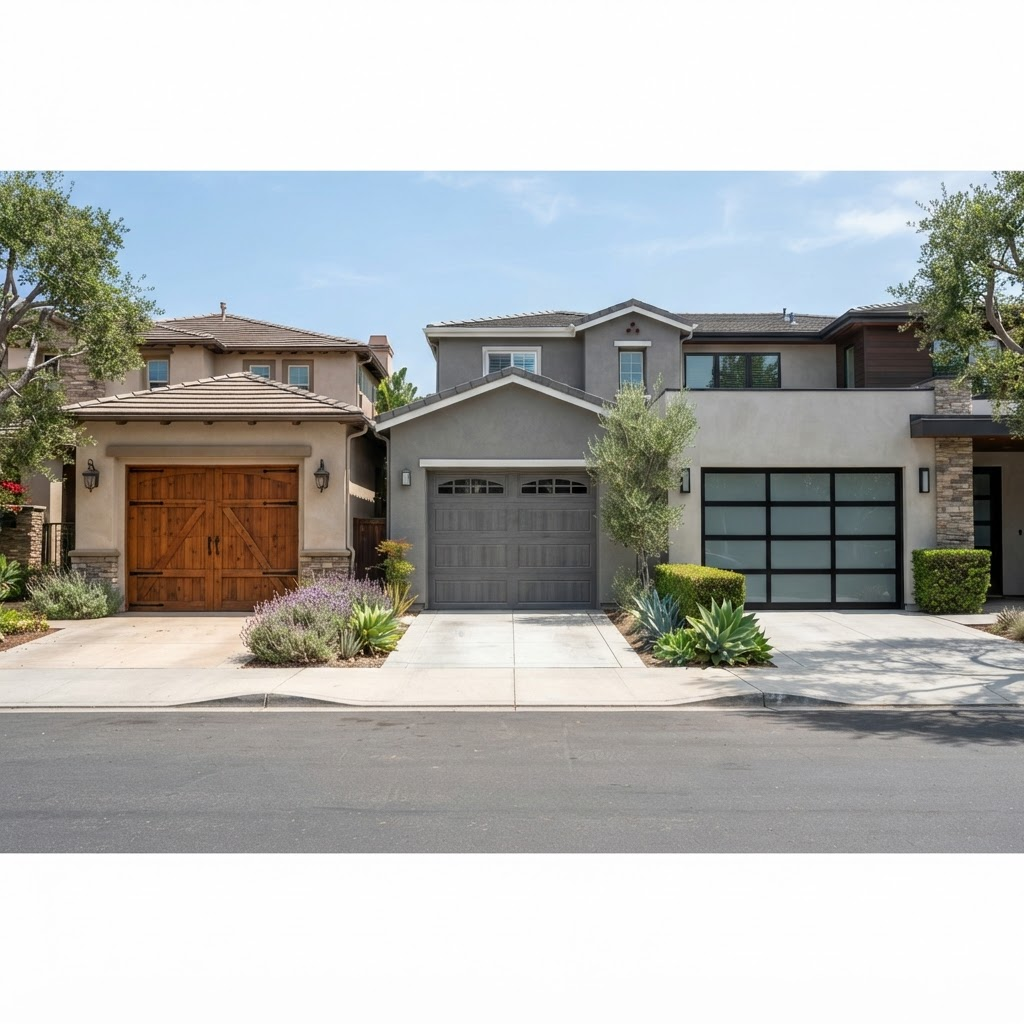
When it's time for a new garage door — whether your old one is beyond repair, you're renovating the home's exterior, or you're building new — the material you choose isn't just a specification on an order form. It determines how the door looks for the next two decades, how much maintenance it demands from you every year, how well it handles Silicon Valley's climate, how much energy it saves (or doesn't), and ultimately how much value it adds to your property.
For most homeowners in San Jose and Silicon Valley, the choice comes down to three materials: steel, wood, and aluminum. Each one has genuine strengths and real limitations, and the right choice depends on a combination of your budget, your home's architectural style, your tolerance for maintenance, and how you use your garage.
This guide compares all three materials honestly — not as a sales pitch for whichever option has the highest margin, but as a practical framework to help you choose based on what actually matters to you. Before choosing a material, it's worth confirming a replacement is even necessary — our repair or replace decision guide helps you answer that first question.
Steel: The All-Around Performer
Steel garage doors dominate the residential market, and it's not hard to see why. They offer the broadest combination of durability, affordability, design variety, and low maintenance of any material available — which is why roughly 70 percent of new residential garage doors sold in the United States are steel.
Modern steel doors bear almost no resemblance to the flat, boring, builder-grade panels of decades past. Today's steel doors are manufactured in hundreds of styles, colors, and configurations — from traditional raised-panel designs to contemporary flush panels, carriage-house styles with decorative hardware, and modern full-view designs with glass inserts. Many premium steel doors include realistic wood grain texturing that's been stamped and painted to mimic the appearance of real wood with remarkable fidelity. From normal viewing distance — standing at the curb — a quality wood-look steel door is difficult to distinguish from genuine wood.
The Three Construction Tiers
Steel doors are available in three construction tiers, and understanding them is important because the tier affects everything from noise to dent resistance to insulation value.
- Single-layer construction is a single sheet of steel with no insulation or backing. These are the entry-level option — lightweight, affordable, and functional, but they offer no thermal insulation, no noise dampening, and minimal dent resistance. The steel skin flexes easily, and impacts that a two-layer door would shrug off will leave visible dents. Single-layer doors are appropriate for detached garages, storage buildings, and situations where budget is the primary concern and daily comfort isn't a factor.
- Double-layer construction adds a slab of polystyrene insulation behind the steel skin. This improves thermal performance (typically R-6 to R-9), adds structural rigidity, and reduces operating noise. Double-layer doors are a meaningful upgrade over single-layer for any attached garage.
- Triple-layer construction sandwiches polyurethane foam insulation between two steel skins — exterior and interior. The polyurethane is sprayed in and expands to fill every cavity, bonding to both steel surfaces and creating a composite structure that's dramatically stronger, quieter, and better insulated (typically R-12 to R-18) than either single or double-layer alternatives.
Triple-layer doors are the premium choice and the one we recommend most frequently for Silicon Valley homes where garages are attached to living space, where homeowners value quiet operation, and where the garage serves as more than just vehicle storage.
Steel's Weakness
The primary weakness of steel is its vulnerability to denting. A basketball, a bicycle handlebar, or a minor vehicle impact can dent a steel panel, and while minor dents can sometimes be repaired, deep dents with sharp creases usually require panel replacement. Steel can also rust if the factory finish is compromised — a scratch, chip, or gouge that exposes bare metal will develop surface rust within weeks if not touched up. In Silicon Valley's mild but seasonally wet climate, rust is manageable with prompt attention to finish damage, but it's a maintenance reality that aluminum and fiberglass don't share.
Steel door pricing in the San Jose market ranges from $800 to $2,500 for a standard 16-foot two-car door, depending on construction tier, gauge, style, and features. Professional installation adds $300 to $500. The sweet spot for most homeowners in Campbell and Santa Clara — a quality insulated steel door with attractive styling — falls in the $1,400 to $2,200 range installed.
Wood: The Premium Natural Statement
There's a warmth, depth, and character to real wood that no manufactured material can truly replicate, regardless of how advanced the stamping and painting technology becomes. A wood garage door isn't just a door — it's a design element that gives your home's facade a level of natural beauty and craftsmanship that catches the eye and holds it.
For homeowners in neighborhoods where architectural character and curb appeal carry significant weight — communities like Willow Glen, Los Gatos, Saratoga, and Palo Alto — a wood door makes a genuine premium statement that complements the home's architecture in a way that a manufactured material, however well-executed, simply can't.
The most common wood species used for garage doors include cedar (naturally rot-resistant, dimensionally stable, and beautifully grained), redwood (stunning color and grain but increasingly expensive and limited in availability), mahogany (rich tones, excellent durability, and superior weather resistance), and hemlock or Douglas fir (more affordable, with good structural properties but less natural weather resistance than cedar or mahogany).
The Maintenance Trade-Off
The trade-off for this beauty is maintenance. Wood is a natural material that responds to its environment. It absorbs moisture in wet weather and releases it in dry weather, which causes expansion, contraction, and over time, warping and cracking if the wood isn't protected. UV radiation from sunlight breaks down the wood's surface fibers, causing graying and roughening. Insects — particularly termites and carpenter ants — can colonize unprotected wood, causing structural damage that compromises the door's integrity.
To prevent these issues, wood doors require periodic refinishing — staining or painting every two to four years, with the frequency depending on the wood species, the finish type, and the door's sun exposure. A south or west-facing wood door in a sun-exposed location may need refinishing every two years. A north-facing door in partial shade may go four years between coats.
The refinishing process involves cleaning the surface, lightly sanding to create adhesion, applying a primer if paint is used or a penetrating stain if stain is used, and finishing with a protective topcoat. It's a half-day to full-day project for a DIYer, or $300 to $600 for professional refinishing. Neglecting refinishing — which many homeowners do — leads to progressive deterioration: the finish fails, moisture penetrates the wood, the wood begins to warp and crack, and eventually the door becomes structurally compromised.
Wood doors are also heavier than steel or aluminum, which means they require heavier-gauge springs and a more powerful opener. This increases both the initial installation cost and the long-term maintenance costs for the spring and opener systems that support the door.
Wood door pricing ranges from $1,500 to $5,000 or more for a standard two-car door, depending on species, construction method, panel design, and window configurations. The USDA Forest Products Laboratory provides detailed technical data on wood species properties and exterior wood performance that can help homeowners evaluate specific species for durability in their climate.
Aluminum: The Modern Lightweight
Aluminum garage doors have surged in popularity over the past decade, driven primarily by the contemporary and modern home designs that are increasingly common in new construction and renovations across Silicon Valley.
The signature aluminum door style is the full-view design — aluminum frames with large panels of frosted, tinted, clear, or obscured glass. These doors create a striking visual statement that blurs the boundary between indoor and outdoor space, floods the garage with natural light, and complements the glass-and-metal design vocabulary of modern architecture. In neighborhoods with newer contemporary builds — areas of Cupertino, Mountain View, Los Altos, and new developments throughout the valley — full-view aluminum doors have become a defining architectural element.
Aluminum is naturally resistant to rust and corrosion, which eliminates the finish maintenance that steel requires and the refinishing cycle that wood demands. An aluminum door will never rust, never need painting for protection (only for aesthetics), and never develop the surface deterioration that neglected wood experiences. This corrosion resistance is particularly valuable for homes in Fremont and Newark near the bay, where salt air accelerates corrosion on unprotected metals.
Aluminum is also the lightest of the three materials, which reduces stress on springs, openers, and hardware — potentially extending the service life of these supporting components and reducing the frequency and cost of spring and opener replacements over the door's lifetime.
The primary downsides of aluminum are its vulnerability to denting (aluminum dents more easily than steel because it's softer), its lower insulation value compared to insulated steel (though insulated aluminum options are available at a premium), and its higher cost relative to basic steel.
Aluminum door pricing ranges from $1,200 to $4,000 or more for a standard two-car door, with full-view glass models commanding the higher end of that range. Custom configurations — unusual sizes, specialty glass types, designer finishes — can push the cost higher.
Climate Considerations for Silicon Valley
San Jose and Silicon Valley enjoy a mild Mediterranean climate — warm, dry summers and cool, wet winters — that's far gentler on garage door materials than extreme climates. There are no deep freezes, no heavy snow loads, no sustained humidity, and no salt spray (except for bayside communities). This means all three materials perform well from a durability standpoint.
The seasonal rain — typically November through March — is the primary environmental challenge. Steel doors handle rain well as long as the finish is intact. Wood doors handle rain well as long as the finish is maintained. Aluminum doors are naturally impervious to moisture. The main concern across all three materials is the weatherstripping, not the panels themselves — making proper weather sealing the more important investment regardless of which material you choose.
Making Your Decision
For most homeowners across Sunnyvale, Evergreen, and throughout Silicon Valley, insulated steel is the best all-around choice. It offers the widest range of styles to match any architecture, requires minimal maintenance, provides excellent insulation and noise reduction, resists weather effectively, and delivers the strongest value for the investment. When in doubt, a triple-layer polyurethane-insulated steel door is the safest bet.
Wood is the right choice if architectural beauty, natural warmth, and premium curb appeal are your top priorities — and if you're committed to the ongoing maintenance that wood demands. A well-maintained wood door on the right home is breathtaking. A neglected wood door is an expensive problem.
Aluminum is ideal for modern and contemporary homes where clean lines, glass panels, and natural light are central to the design intent. The corrosion resistance and light weight are practical bonuses, and the aesthetic impact on a modern home is unmatched. Whichever material you land on, our guide on garage door styles that match Silicon Valley architecture takes the next step, matching specific door designs and styles to the most common home types in the region.
Not sure which material is right for your home?
We provide garage door repair and new-door consultations across Milpitas, Almaden Valley, Berryessa, and every Silicon Valley community. We'll help you choose the right material, style, and insulation level for your home — and install it with the precision that keeps it beautiful and reliable for decades.
Request a free material consultation