
How Long Do Garage Door Openers Last? (And When to Replace Yours)
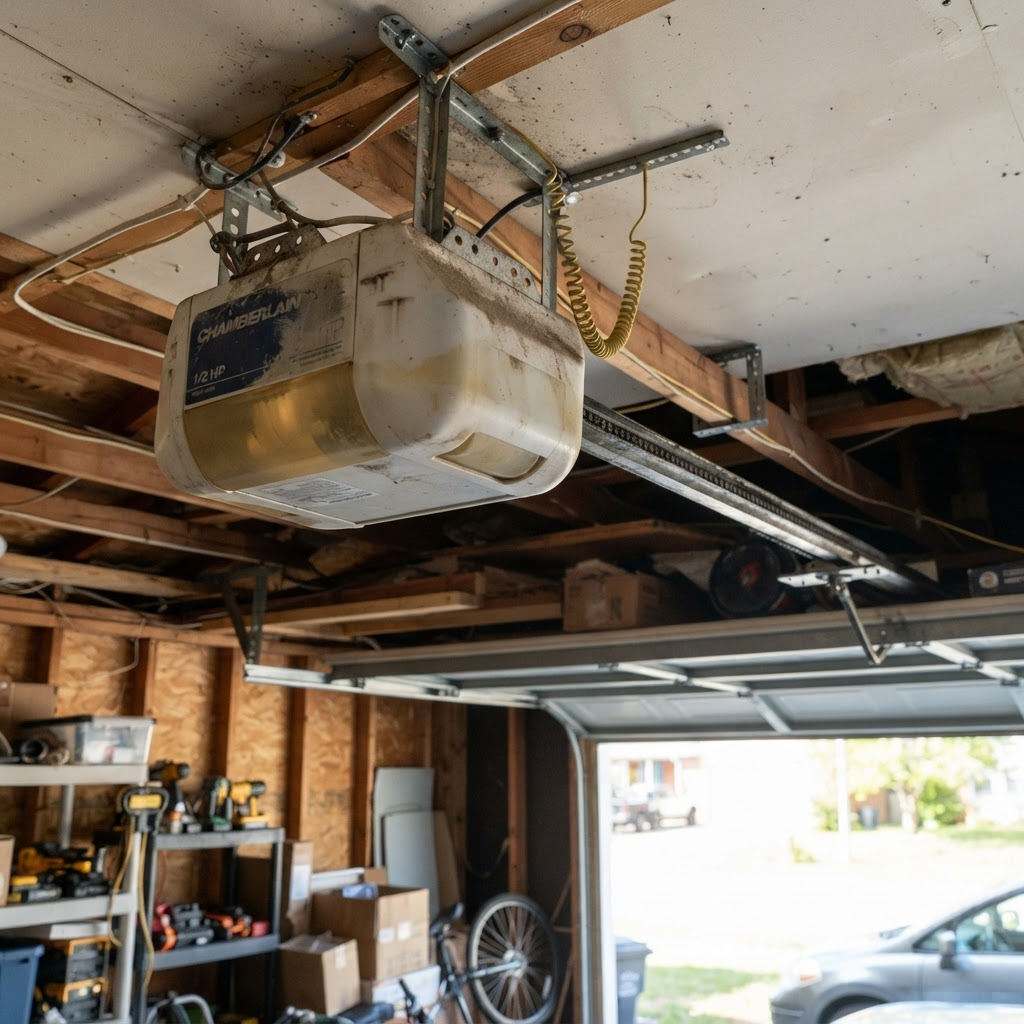
Your garage door opener has been part of the background noise of your daily routine for years — maybe a decade, maybe longer. You press the button, it opens. You press it again, it closes. It's always just worked, and because it's always just worked, you've never given it a second thought. But lately something feels different. There's a half-second delay that wasn't there before. The motor sounds like it's working harder. The door occasionally hesitates at the top of its travel. And that one time last week when it didn't respond at all — you had to press the button three times before anything happened.
You're starting to wonder: how long are these things supposed to last, and is mine telling me it's time?
The Average Lifespan — By the Numbers
A well-maintained garage door opener lasts 10 to 15 years on average, with some high-quality units lasting 20 years or more under ideal conditions. The U.S. Department of Housing and Urban Development references similar ranges in their residential building component guidelines, and the Door and Access Systems Manufacturers Association (DASMA) provides comparable estimates.
But "average" covers an enormous range of actual outcomes, because lifespan is determined by factors that vary dramatically from household to household.
Usage Frequency Has the Biggest Impact
Every time the opener cycles the door, it puts wear on the motor, the gear train, the drive mechanism, and the electronic components. A household in San Jose that uses the garage door four times a day — a typical two-commuter household — puts roughly 1,460 cycles per year on the opener. A household with multiple drivers, teenagers, frequent deliveries, and a garage that serves as the home's primary entry point might put 2,500 to 3,000 cycles per year on the same unit. Over a decade, that usage difference amounts to 10,000 to 15,000 additional cycles — enough to halve the opener's remaining service life.
Door Balance Is a Critical Factor
This is something most homeowners never consider. Your opener is designed to move a door that effectively weighs 10 to 15 pounds — because the springs counterbalance the door's actual weight. When the springs gradually lose tension over their lifespan, the door's effective weight creeps upward — 20 pounds, 30, 50, eventually 100 or more. The opener compensates by working harder on every cycle, which overheats the motor, accelerates gear wear, and shortens the unit's life significantly. This is why regular spring maintenance doesn't just protect the springs — it protects the opener.
Environmental Conditions Affect the Electronics
Garage conditions affect the electronic components specifically. Heat accelerates capacitor aging and degrades circuit board solder joints. Humidity promotes corrosion on electrical contacts. Dust infiltrates the motor housing and increases friction on the gear train. Vibration — both from the opener's own operation and from the door's travel — loosens internal connections over time. Most Silicon Valley garages are relatively mild environments compared to extreme climates, which is one reason openers in this region tend toward the upper end of the lifespan range.
Installation Quality Matters More Than You'd Think
An opener that was improperly mounted — with a rail that's not level, a trolley that binds at a point in its travel, or force settings cranked too high to compensate for a misaligned door — wears faster than a unit that was professionally installed and calibrated. The vibration from a misaligned rail transfers into the motor housing, loosens internal fasteners, and accelerates gear wear. If your opener was a quick retail install or a DIY project with compromised alignment, it may age faster than its rated lifespan suggests.
The Signs That Yours Is Approaching End of Life
Openers don't usually fail all at once. They show progressive symptoms over months or even years that indicate declining performance — and recognizing these symptoms helps you plan a replacement on your schedule rather than dealing with a sudden failure at the worst possible moment.
Slow response to remote or wall button commands — a delay of two or more seconds between pressing the button and the motor activating — suggests a weakening motor capacitor, aging receiver electronics, or a failing logic board. The opener is taking longer to process the signal and generate starting torque.
Inconsistent operation — working fine some days and struggling others, or responding to the wall button but not the remote (or vice versa) — often indicates an intermittent electrical issue. Loose wire connections, cracked solder joints on the circuit board, or a motor that's beginning to overheat under normal loads can all produce symptoms that come and go unpredictably.
Increasing noise — particularly a grinding, whining, or rattling that's louder than it used to be — points to wear in the gear train or drive mechanism. As gears wear, they mesh less precisely, creating more friction, more heat, and more noise with each cycle. This is a progressive condition that worsens until the gear teeth eventually strip entirely.
Frequent thermal protection trips — where the motor shuts off mid-cycle and needs 15 to 30 minutes to cool down before it will run again — means the motor is generating more heat than its cooling system can dissipate. This often happens alongside a door that's drifted out of balance, but it can also indicate a motor that's simply worn out and can no longer handle its designed workload efficiently.
Safety feature gaps are a compelling reason to consider replacement even when the opener is still technically functional. If your opener predates 1993, it almost certainly lacks the photoelectric safety sensors that are now federally mandated. If it predates the mid-2000s, it likely uses fixed-code or limited-code security rather than modern rolling code encryption. If it lacks battery backup, timer-to-close, or smart connectivity, those are features that meaningfully improve daily safety and convenience — and they can't be retroactively added to older units.
Repair vs. Replace — The Decision Framework
Not every aging opener needs to be replaced. Individual component failures — a stripped gear ($150–$250), a failed capacitor ($100–$175), a worn belt or chain ($100–$200) — are all repairable at a fraction of the cost of a new unit. Our chain vs. belt vs. screw drive comparison can help you evaluate whether a drive system upgrade makes sense during a repair visit.
Replacement becomes the smarter investment when the repair cost exceeds 50 percent of a new unit's price, when the opener is over 15 years old and showing multiple symptoms simultaneously, when safety features are absent and can't be added, or when you're ready for smart connectivity and the quiet, smooth operation of a modern belt-drive unit.
A new opener — belt-drive, WiFi-connected, with battery backup — typically costs $550 to $950 fully installed in the Silicon Valley area. Over a 12 to 15-year lifespan, that works out to roughly $40 to $80 per year for reliable, quiet, smart operation with full modern safety features.
For the complete decision framework that covers your entire door system — not just the opener — our repair or replace decision guide walks through the cost math, the age considerations, and the factors that tip the decision in each direction.
How to Extend Your Opener's Life
The most effective thing you can do to extend your opener's lifespan is maintain the door it's attached to. Keep the springs properly tensioned so the door stays balanced. Replace worn rollers that add friction to every cycle. Keep the tracks clean and aligned. Lubricate all moving components annually. Every bit of friction you remove from the door's travel path reduces the load on the opener — and a lighter load means less wear on every cycle.
For the opener itself, lubricate the drive mechanism annually — the chain, belt, or screw — and tighten the mounting hardware that holds the unit to the ceiling bracket. Avoid running the opener against a locked or jammed door. And if the door doesn't respond to the first button press, investigate the cause before pressing again — repeatedly straining the motor against a problem it can't overcome causes cumulative damage.
For homeowners across Cupertino, Mountain View, Sunnyvale, Evergreen, Palo Alto, and throughout Silicon Valley, if your opener is showing the symptoms described in this guide — or if it's simply been running faithfully for 15 years and you want to know where it stands — call for a professional assessment. We'll evaluate the unit honestly, present your repair and replacement options with transparent pricing, and let you make the decision that's right for your situation and budget.
A garage door repair visit can tell you whether your opener has another five good years or whether it's time to upgrade — and either answer saves you money compared to waiting for a sudden failure.
Opener over 15 years old? Get a free upgrade assessment
We'll evaluate your opener's condition honestly, lay out your repair and replacement options with transparent pricing, and help you decide what makes the most sense for your home and budget.
Request your free assessment